Ask a construction executive whether reality capture pays for itself and you will get a confident yes, followed by a shrug when you ask for the number. The reality capture ROI question has never had a public benchmark, because the returns sit inside individual case studies—scattered across firms, countries, and project types. This report pulls them together.
Drawing on 49 OpenSpace customer case studies published across more than 15 countries, it quantifies what reality capture actually returns on construction projects: faster documentation, hard-dollar savings, disputes avoided, safer sites, and adoption rates high enough to matter.
The figures come from real builders on real jobsites—not vendor projections. For the analysts, journalists, and technology evaluators who keep asking what reality capture is worth, this is the first aggregated answer.
Why reality capture ROI has stayed invisible across construction projects
The returns have stayed invisible for the same reason construction itself resists measurement. McKinsey research found that 98% of megaprojects run more than 30% over budget and 77% finish at least 40% late. Money leaks in the gap between what was planned and what got built, yet few firms track the documentation that would close that gap.
Reality capture technology changed the underlying economics years ago, when a 360° camera on a hard hat replaced hours of manual site scanning. What never followed was a shared picture of the payback.
Guides that explain reality capture in construction are easy to find, but hard numbers across many builders are not. Individual firms knew their own results; no one had lined up the outcomes across enough construction projects to turn scattered wins into a benchmark. Reality capture solutions are now mature and widely deployed enough to change that. Put simply, reality capture ROI is discussed everywhere and measured almost nowhere.
How reality capture technology turns a construction site into digital data
Reality capture is the practice of digitally documenting the physical world so it can be measured, compared, and shared. On a construction site, that means recording existing conditions as digital data a project team can revisit at any point in the build, from any location. The method used to capture data shapes what the record can do.
Capture methods, from natural light to laser pulses
Reality capture spans several methods, each suited to different conditions:
- Image-based capture (including 360 photos) depends on natural light to record physical spaces from multiple angles.
- Laser scanning uses light detection and ranging, firing laser pulses to measure distance in near-total darkness.
- Structured light scanners project a known pattern to read surface geometry.
- Specialized site scanning borrows from adjacent fields, where sonar emits sound waves underwater and thermal imaging and infrared technology reveal moisture or heat loss the eye misses.
OpenSpace is image-first: attach a 360° camera, walk the construction site, and drones extend the same capture to the air.
From point cloud data to accurate measurements, 3D models, & digital twins
Whatever the method, the output is a cloud of data points that software stitches into a spatial record. Drone and laser capture produce point cloud data, dense point cloud files used to create orthomosaics, elevations, and geospatial data with accurate measurements taken without a return trip. That point cloud is also used to create precise digital representations of the site, replacing the slow, error-prone manual measurements crews once taped out by hand.
Image capture ties every frame to the floor plan automatically, building accurate site data that stays current. Layered over building information modeling, that reality is used to create a living as-built: the digital models and 3D models a superintendent can compare against design intent.
Reality capture work like as-built surveys, once a separate exercise, now falls out of the same walk. Aggregated across the project lifecycle, the same visual data feeds the digital twins, digital models, and as-built drawings owners rely on long after handover, all built from precise measurements rather than guesswork.
How this reality capture data was compiled
This report draws on 49 OpenSpace customer case studies published across more than 15 countries, spanning general contractors, trades, and owners running multiple projects. Outcomes are self-reported by the builders and verified against published case studies, so they reflect real reality capture data rather than a controlled study.
Each result reflects reality capture in day-to-day use, not a lab benchmark. Where a figure comes from a single project, it is noted as such. Full sources for every result sit in the OpenSpace case studies library, linked at the close of this report.
Key findings at a glance
| Return category | What the data shows |
| Documentation speed | 5x to 30x faster than manual capture |
| Cost savings | Up to $15K on a single project, before rework is counted |
| Dispute avoidance | Six-figure fixes caught before they reach the budget |
| Safety | Up to 40% fewer recorded incidents |
| Adoption | Dozens of daily users; whole teams productive after onboarding |
| Global reach | 15+ countries, from the Middle East to Antarctica |
Finding 1: faster construction documentation, from 5x to 30x
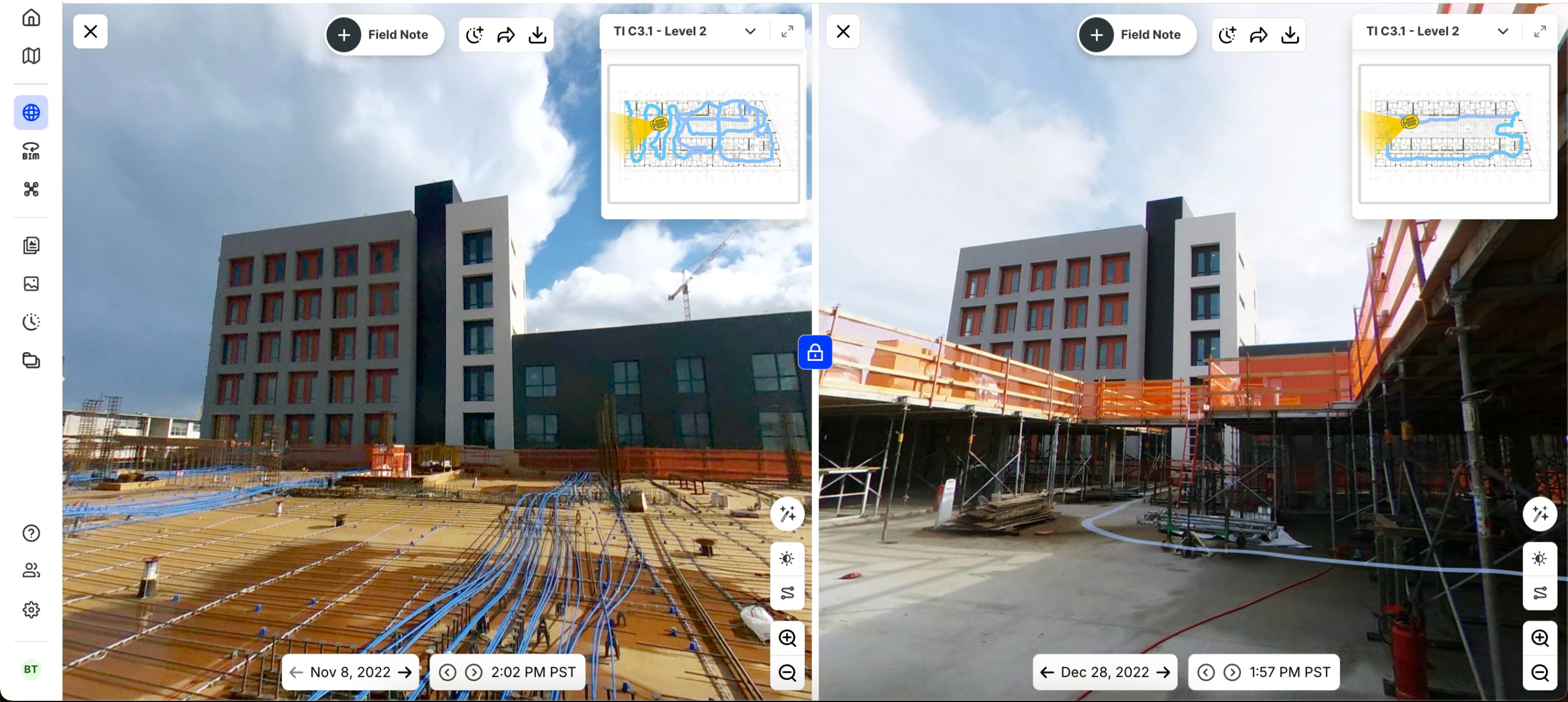
Construction documentation is where the return shows up first. Builders using reality capture for automated 360° documentation record sites 5x to 30x faster than manual methods.
| Builder | Documentation result |
| Lendlease | 30x faster visual documentation, saving nearly half a workday each week |
| Suffolk | 10x faster documentation, and the project delivered a month early |
| Lee Kennedy | 10x more imagery than manual capture, captured 5x faster |
The contrast is stark against manual capture: one team spent almost seven hours walking a single half-floor, about 20% of the project, before reality capture made a complete weekly record of completed work routine. A 360° camera turns that same site capture into a byproduct of a walk everyone already does.
“The first number most builders reach for is hours saved on documentation, because it is the easiest one to put on a spreadsheet. That is why the ROI conversation starts in the wrong place. I got my start on a jobsite and later spent a few years around commercial real estate capital, and the return that matters most sits on the capital side, not the labor side. The number I point to first is the cost of one issue caught before it got built, because a single one of those can outweigh the software many times over. Hours saved gets a builder to try reality capture. Knowing what a mistake would have cost is what makes them stay.”
—Michaela Rhile, Product Manager, OpenSpace
Faster documentation matters because it feeds everything downstream. Complete, current captures from reality capture software become the reference for every meeting on the construction site.
Finding 2: cost savings, from $15K a project to fewer site visits
The savings are concrete and repeatable.
| Builder | Saving | Source |
| Power Design | As much as $15K on a single project | Rework and overcharges avoided |
| JLL | 50% lower travel costs | Virtual site visits |
| Lendlease | $50K on one change order | Rework avoided |
Beyond the hard numbers, the same soft-cost savings recur across accounts:
- Fewer site visits, because the site is already documented.
- Fewer destructive investigations to confirm what sits behind a wall.
- Fewer hours lost to chasing down existing conditions.
Reality capture solutions turn a stack of scattered photos into an organized visual record, simplifying data management and the construction workflows that depend on it. When the capture data is already mapped to the plan, teams optimize processes across the job and mitigate risks before they reach the budget.
Finding 3: the biggest returns come from risk & dispute avoidance
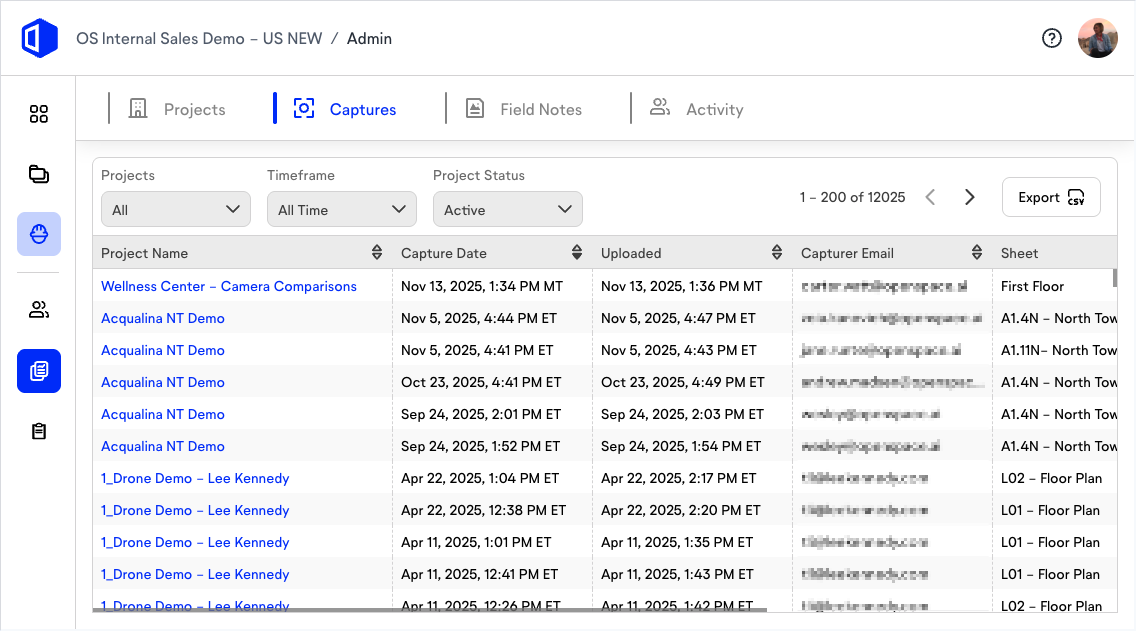
The largest returns are the ones builders never see on an invoice—because the cost never happened. Arcadis puts the average US construction dispute at $60.1 million, so a tamper-proof visual record that resolves an argument early carries real weight on project risk.
Across its customer base, OpenSpace has reported 41% fewer insurance claims on projects documented with the platform.
At the ENR FutureTech 2026 panel, Carey McIlrath of The Christman Company described a single capture taken before a floor pour that flagged misaligned pipe, catching what would have been a $250,000 fix. Nibbi Brothers uses the same visual history to defend against claims and settle billing questions, comparing actual site conditions to what was invoiced.
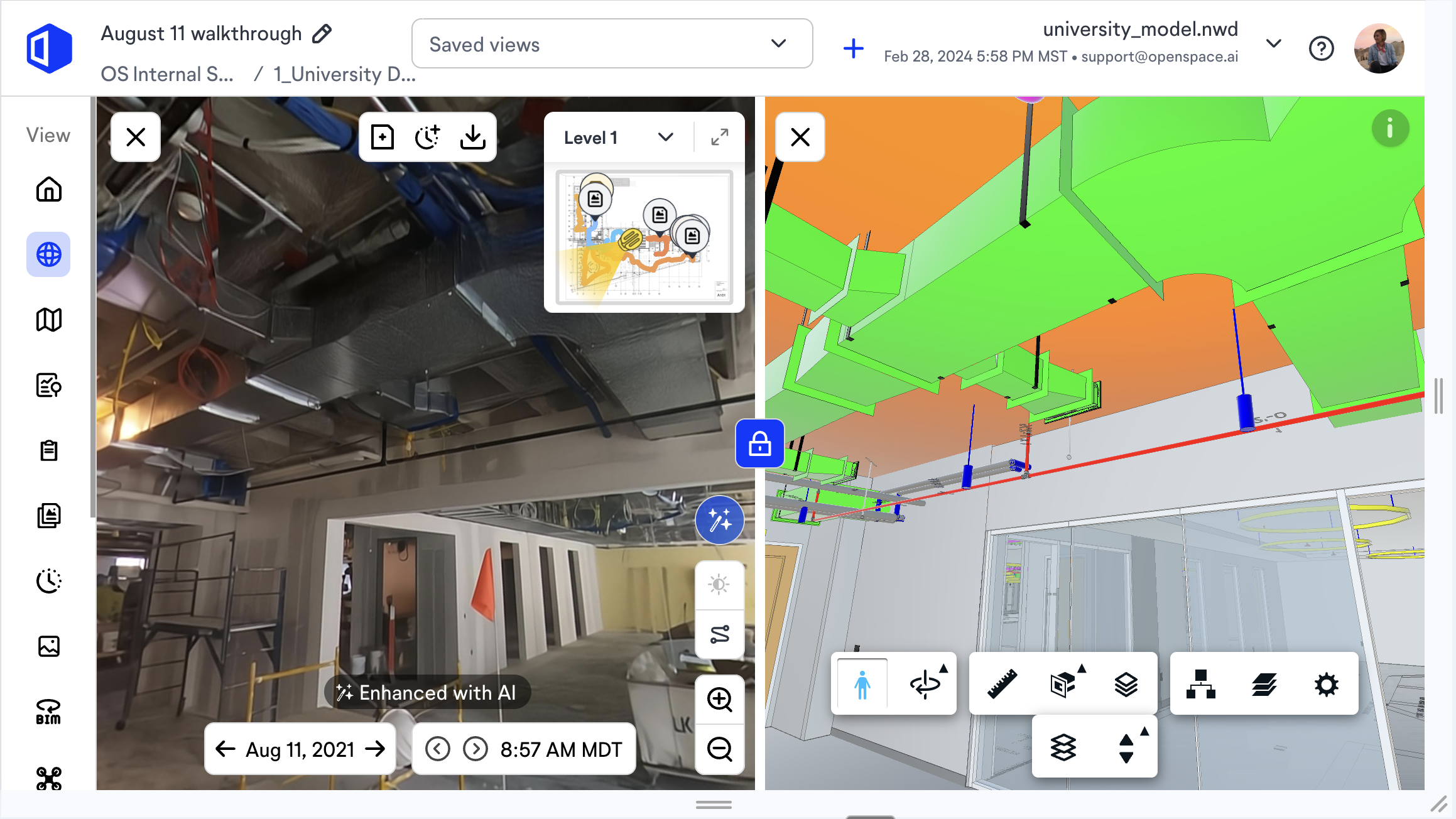
Because captures let teams compare site conditions across dates against as-built conditions and BIM, reality capture also strengthens quality control and quality assurance: point cloud and 3D models line up against the digital models of design intent, and discrepancies surface while they are still cheap to fix. Those 3D models and digital models give quality teams an objective baseline.
“Documentation speed is easy to measure, so it is the first thing builders count and usually where they stop. The return that compounds shows up later, when the visual record stops being a record and starts driving decisions. That is the shift from documentation to Visual Intelligence, and the catch is that the biggest returns are invisible on a spreadsheet. Nobody logs the dispute settled in an afternoon, the rework that never happened, or the change order a capture quietly disproved. Those numbers dwarf hours saved, and they are exactly the ones teams stop tracking.”
—Michael Jones, Head of Product, OpenSpace
See how OpenSpace catches issues before they become claims.
Finding 4: safety gains as a supporting benefit
Safety rarely drives the purchase, but it shows up consistently as a supporting return. EEI recorded 40% fewer incidents after adopting reality capture, based on comparison within its own project safety portfolio.
The mechanism is accountability: when a site is documented every week, crews know potential safety hazards are visible, and behavior shifts before an inspector arrives. Teams also fold captures into quality control inspections, generating a report from a safety walk without retyping notes. The safety return is real, but it reads best as one benefit among several rather than the headline.
Finding 5: adoption, do project teams actually use reality capture?
Yes — adoption is high when capture is easy, and that easy adoption is what converts a subscription into ROI. The pattern repeats across very different organizations:
- Christman — 23 staff members using OpenSpace daily on one project to run trade and progress meetings, after a couple of operations leads started pulling up current captures.
- BESIX Watpac — moved from a pilot to rolling reality capture across all company projects once the results were clear.
- Nedbank — teams productive almost immediately after onboarding.
The through-line is that field crews adopt what saves them work, and project stakeholders stay aligned when everyone reviews the same record. Captures also sync into existing project management platforms, so progress tracking and the visual record reach the systems teams already run.
Finding 6: a global shift across the construction industry
Reality capture is no longer a US and UK story. The 49 case studies span more than 15 countries across the construction industry, from leading construction firms in Europe and the Middle East to owners in Africa and industrial facilities in Asia.
Reality capture has moved from a regional experiment to a global standard, and the reality capture software behind it now runs in more than 15 countries.
OpenSpace has processed more than 69 billion square feet of imagery and runs on complex environments as remote as Antarctic research projects. The takeaway for anyone benchmarking the category: the ROI evidence is now geographically broad, not a handful of early adopters in two markets.
What the reality capture ROI data means for builders evaluating capture solutions
Read together, the data tells a clear story. Documentation speed is the entry point—the return builders notice first—but it is the smallest number in the set. The larger returns compound as the visual record moves from documentation to intelligence: disputes settled, rework avoided, progress tracking that holds up for billing, and decisions made from actual conditions instead of opinion.
That is the difference between software that simply stores images and a reality capture platform that turns them into action. Reality capture is the entry point; the payoff is a Visual Intelligence Platform, where captures become intelligence and intelligence becomes better decisions, faster. For builders weighing capture solutions, the question is no longer whether reality capture returns value, but how much of that value they are leaving on the table today.
Request a demo and see the ROI on your own projects
Frequently asked questions
What upfront investment does reality capture require?
Very little beyond a compatible 360° camera and a smartphone the field already carries. Image-based reality capture software needs no embedded hardware or infrastructure on site, so most builders are capturing within minutes of setup. Costs scale with projects and users rather than with a large capital purchase.
How long before builders see reality capture ROI?
Most builders see value from the first capture, when a complete visual record replaces a partial one. Time savings on documentation appear immediately, while the larger returns from disputes and rework avoidance accrue over the life of the build. Because adoption is fast, the payback window is measured in weeks rather than quarters.
Does reality capture ROI hold on smaller construction projects?
Yes, though the return shows up differently. Smaller jobs see less travel and documentation savings in absolute dollars, but the same dispute and rework protection applies, and a single avoided claim can outweigh the software cost many times over. The per-project math holds because capture adds almost no labor to a walk teams already do.
Ready to run your own numbers? Calculate the ROI on your projects with the OpenSpace ROI calculator, or explore the full OpenSpace case studies library to see the outcomes behind this report