General contractors need a reliable record of how work is progressing from week to week—or even day to day—so they can stay on schedule and keep costs in check. This is why automated progress and construction productivity tracking is essential. But despite the proliferation of technology on construction sites, many GCs are still handling progress tracking with a manual process.
Automated progress tracking is the use of reality capture imagery and AI analysis to compare planned work against work actually completed on a jobsite, replacing manual methods like clipboards, highlighters, and spreadsheets. Construction productivity tracking measures how efficiently a project converts labor and materials into completed, verified work over time.
For example, a Project Engineer, armed with a clipboard and the floor plan, walks the site and uses a highlighter to note where framing and electrical wiring have been completed. She might also have a tape measure to determine how many linear feet of drywall have been installed. When she is finished, those pieces of paper are taken to a desk so that someone can input the data into Excel—which is finally uploaded into scheduling software like Primavera P6.
This manual process is highly error-prone, which can lead to inaccuracies in scheduling that disrupt workflow and result in delays. It is also highly time-consuming for the Project Engineer, especially when done on a daily basis. Last but not least, this manual process can lead to discrepancies with payments and invoices if subcontractors are not careful or if the progress record isn’t reliable.
Below we look at the three areas where problems with progress and construction productivity tracking have the most serious implications for a project: scheduling, subcontractor payments, and overall efficiency.
How does manual progress tracking cause scheduling errors?
Manual progress tracking causes scheduling errors at the handoff. Every time field status is transcribed into the schedule by hand, an activity can be misread, mismarked, or entered late, and the schedule quietly drifts from what is actually built. The damage shows up later, when work gets sequenced against progress that was never really there.
On a large, complex project, scheduling software like Primavera P6 can contain more than 10,000 individual items, which Superintendents are usually responsible for updating. Sometimes Project Engineers note whether an activity is completed or mark the percentage complete on an iPad, but in many cases, the process is undertaken manually on paper. Since scheduling relies on proper sequencing and accounting for contingencies, the likelihood of errors grows in proportion to the size and complexity of the project.
Scheduling failures caused by spotty, manual project tracking can lead to many types of disruptions. For starters, if a sub shows up ready to work but the job site isn’t ready for them, they’ll still expect to be paid. Workers might come in with the expectation that they’ll install conduits, only to find out that the framing hasn’t been put in yet. Budgets can spiral out of control due to unforeseen costs of this nature. Then the work that’s completed doesn’t match the budget expenditure.
Spend and installed work drift apart quietly, which is why progress and productivity need to be measured separately rather than read off the same cost report.
Why does reliable progress tracking matter for subcontractor payments?
Reliable progress tracking matters for payments because it turns the pay application into an evidence-based step instead of a trust exercise. With a dated visual record of what each trade has installed, a GC can question or adjust a claim during the billing cycle, before money goes out, rather than discovering the gap after the fact.
No GC wants to be seen as a “pass-through contractor” who simply passes along subcontractors’ estimates of how much material has been installed to owners without verifying them for accuracy first. But this invariably happens on many construction sites due to the fact that each sub—from drywall installers to electricians to plumbers—is typically free to track what they do in their own way. Project Managers in charge of payment applications are often too stretched to have time to verify each spreadsheet input from every sub, and the owner may overpay significantly as a result.
Reliable progress tracking derived from a complete, regularly-updated digital record of the jobsite can remedy this. If GCs can easily find the discrepancy between the amount of material a subcontractor has recorded as installed and the actual amount installed, they can reconcile it with the sub instead of blindly passing it through to the owner.
A reliable progress monitoring process is what makes that kind of reconciliation possible—an AI estimate is a useful start, but a verified number is what survives a payment conversation.
How does automated progress tracking improve jobsite efficiency?
Automated progress tracking improves efficiency by removing the reporting layer between a question and its answer. When the current state of the work is already captured and available to whoever needs it, no one waits on a manually compiled update before they can plan, bill, or make a call, which is where most of the lost time in manual tracking actually goes.
Trustworthy project tracking based on a single source of truth helps project stakeholders across the board. Once the process no longer relies on walking around with a clipboard and highlighter to document the status of specific areas, the Project Engineer clearly benefits. Project Managers who may have previously spent half their time on payment applications also benefit, since reliable project-tracking technology means they can check on the status of work from their computer without having to find the right people to talk to.
At the same time, Superintendents can be more confident about the accuracy of the schedule, while Owners can drop in on the project whenever they want to for a view of actual conditions, unfiltered by what GCs and subs want them to see. Giving every stakeholder that unfiltered view is what construction progress monitoring delivers when it is done consistently from the first capture onward.
Ultimately, effective project tracking can be the difference between profitable, on-time delivery and significant delays and cost overruns.
Profitability at that level is where return on investment in construction gets decided, well before anyone opens a spreadsheet to total it up.
It provides consistent data that can be used to validate how a delay came to be, rather than enabling unproductive finger-pointing based on someone’s hunch. Having that consistent data from day one is exactly why more builders now track progress across a project using reality capture rather than waiting until problems surface to start paying attention.
Frequently asked questions
Can automated progress tracking replace manual site walks?
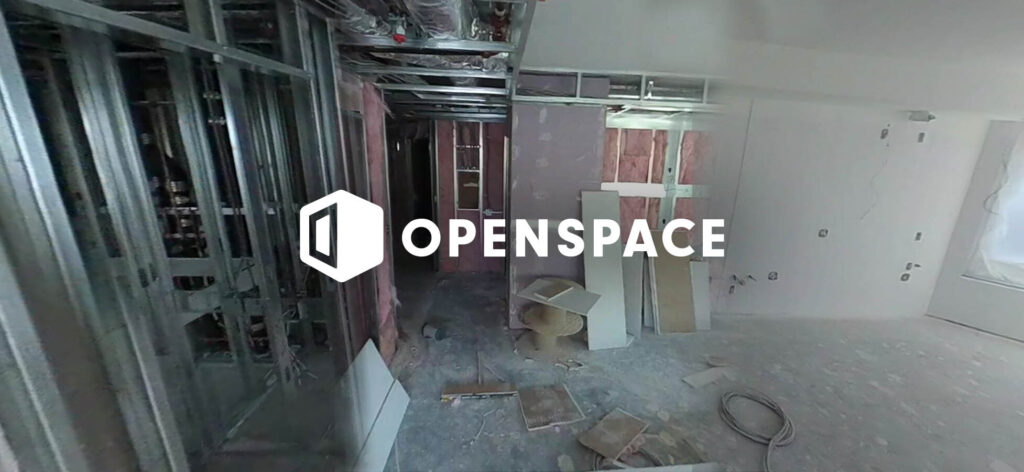
Not entirely, and that distinction matters. Someone still walks the jobsite, but the walk itself becomes the capture. Instead of stopping to mark a floor plan by hand, a team member records 360 imagery while walking, and that imagery is mapped to the plan automatically. What automated progress tracking replaces is the manual recording and re-entry that used to follow every walk, not the act of being on site to see the work.
How can teams use progress tracking to improve construction productivity?
Builders use the captured progress record to compare planned work against what crews have actually completed, area by area. When a section falls behind the expected pace, that gap becomes visible early, while there is still time to shift labor, resequence trades, or address whatever is slowing the work. Used this way, a regular progress record helps teams manage crew output during the project rather than simply report on it afterward.
If you’re interested in learning how OpenSpace helps with automated progress tracking & construction productivity tracking for all kinds of builders, reach out and talk to our team today.