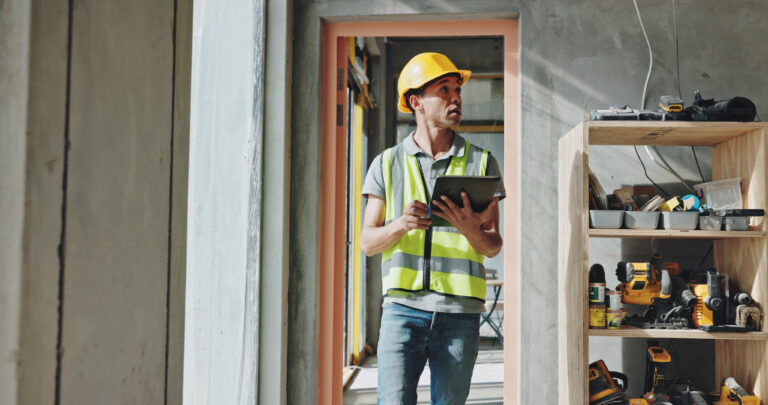
Remote construction site monitoring is the practice of capturing, tracking, and reviewing construction site conditions and progress without physically visiting the job site
Before visual intelligence platforms entered the construction industry, remote visibility meant waiting on email updates and chasing photos scattered across phones and shared drives.
Sometimes it meant flying to a site to settle a dispute that a time-stamped image could have resolved in minutes. Builders dealt with delayed reporting, subjective status updates, and a field that remained the least transparent part of a capital project.
Structured, searchable intelligence gives any stakeholder, on-site, in the office, or across the world, something they can actually act on. Cameras and sensors are just the starting point.
Why the field remains the most underutilized source of project insight
Most construction projects generate more imagery than ever. Field teams photograph conditions, log issues, and document progress daily. Yet project managers still describe the same problem: they do not know what is happening on site until something goes wrong.
The gap is a lack of structure. Photos unlinked from floor plans, progress reports assembled each week manually, and status calls based on estimates rather than evidence all create the same outcome: decisions made on incomplete information or lack location context.
Research from the FMI and PlanGrid “Construction Disconnected” report, published on Autodesk’s blog, found that nearly half of all rework in the construction industry is tied to poor communication and missing project information. The Construction Industry Institute puts direct rework costs at an average of five percent of total project costs. On a $50 million project, that is $2.5 million in avoidable expenditure.
The root cause, consistently, is a visibility gap. Decisions get made without an accurate picture of current site conditions. Remote monitoring closes that gap, but only when the imagery captured is mapped, time-stamped, and made intelligible.
How remote construction site monitoring works
Effective site monitoring follows four stages: capture, map, analyze, and share.
Capture
Field teams walk the site with 360° cameras or smartphones, collecting a complete visual record tied to a consistent cadence. OpenSpace Capture documents up to 25,000 square feet in ten minutes, making systematic site documentation practical at scale without a dedicated documentation crew.
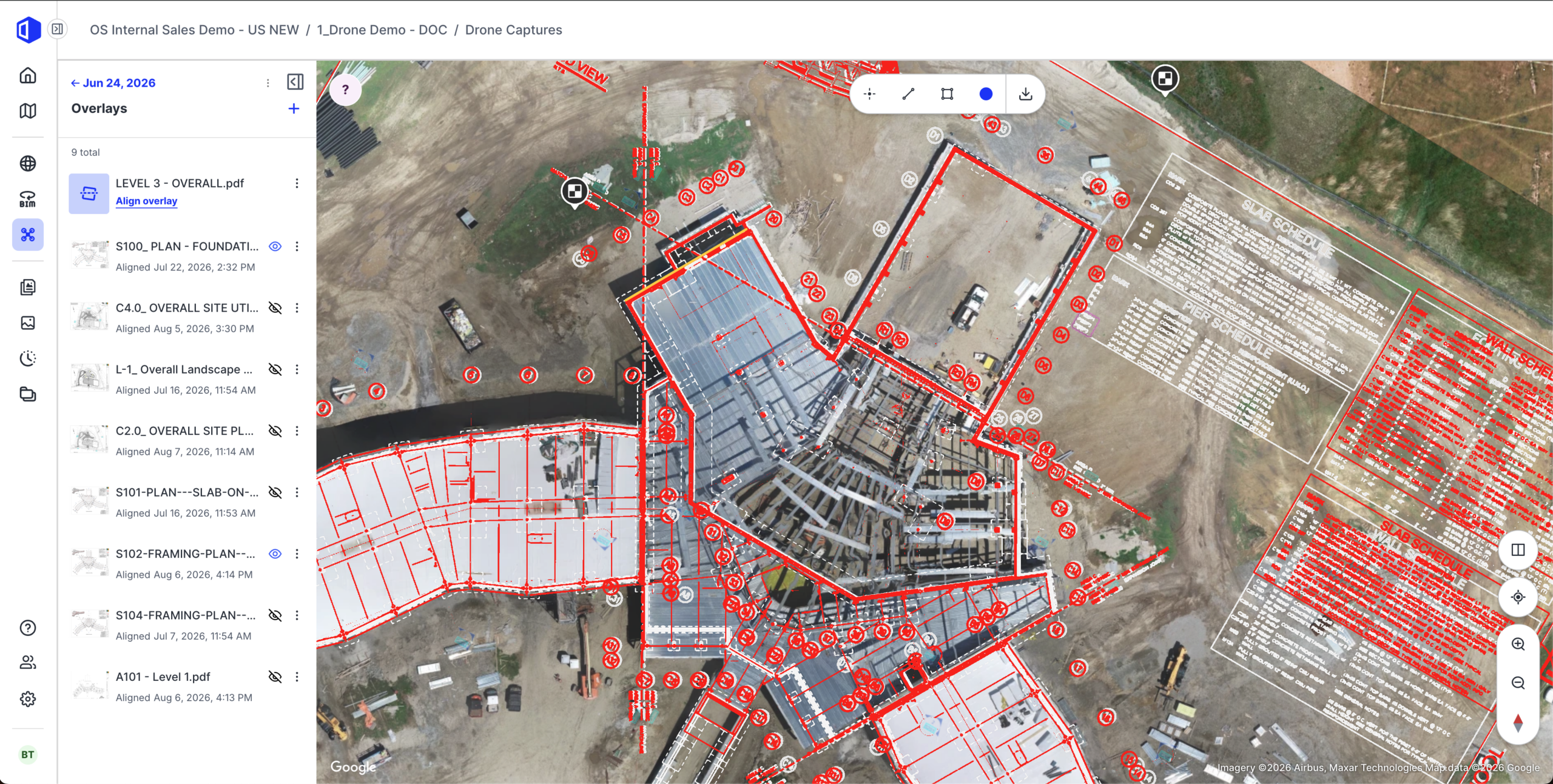
OpenSpace Air extends visibility to the aerial layer, processing drone imagery into high-quality orthomosaics and 3D meshes, covering earthwork conditions, drainage, and site layout from above.
Map
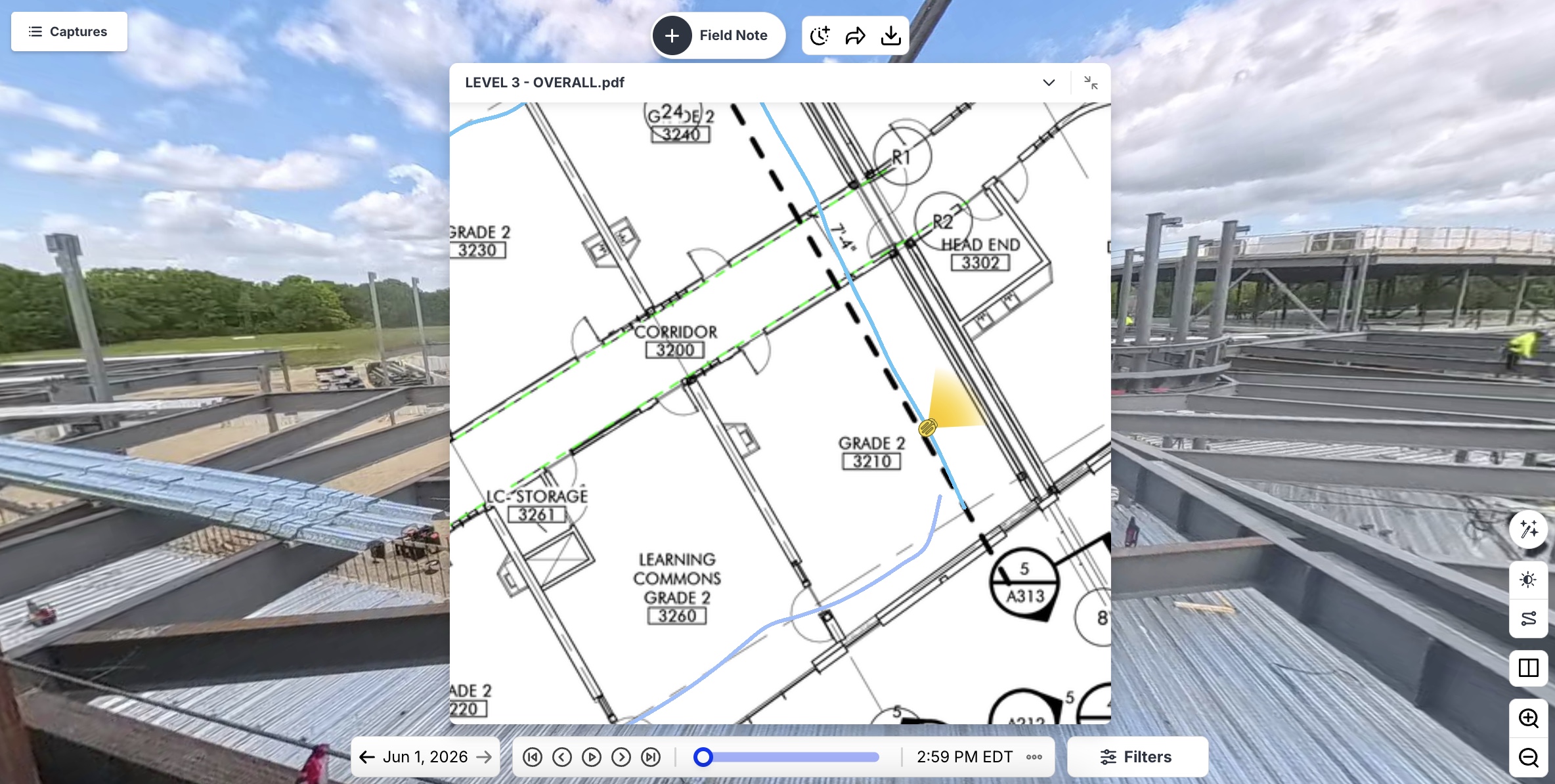
AI automatically time-stamps and maps every capture to the floor plan. The monitoring system links what happened, where it happened, and when, creating a navigable visual record that any stakeholder can move through without being on site.
Analyze
Construction monitoring surfaces deviations before they compound: out-of-sequence installs, trade conflicts, conditions that do not match the design. AI-powered Spotlights automatically flag areas where work may be behind or inconsistent, so project managers can act on facts rather than reports.
Share
Because captures are accessible from any browser, remote access to site conditions does not require travel. Owners review progress from their office. Project executives compare conditions across multiple sites simultaneously. Findings sync to Procore and Autodesk directly.
What builders can track remotely, & what most miss
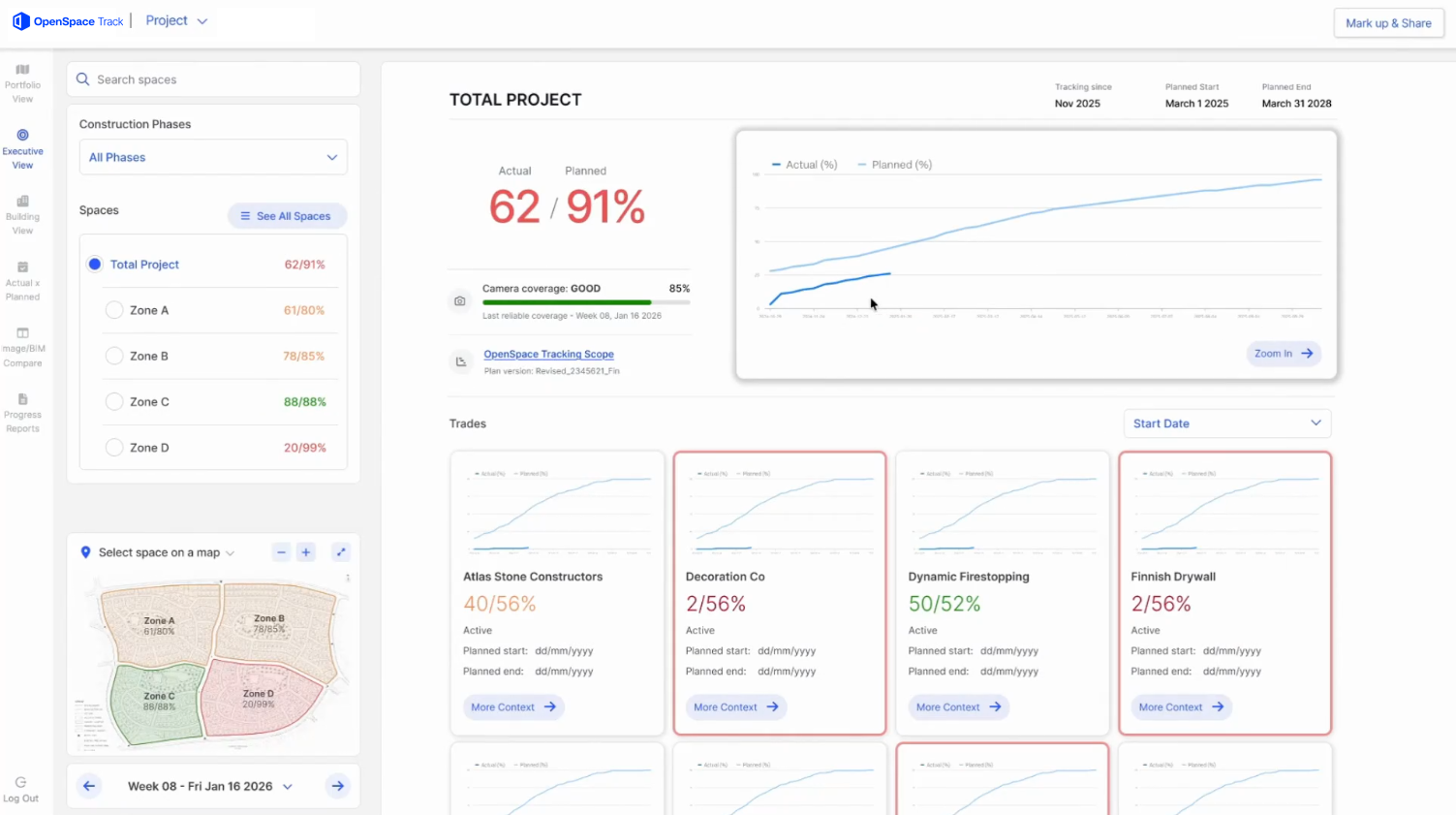
The most common use of a remote monitoring system is progress verification: confirming that work is advancing on schedule across floors, zones, and trades. OpenSpace Track shows percent complete by trade and floor, compares planned vs. actual, and surfaces where the rate of work is slowing before a delay becomes unrecoverable.
Because every capture is time-stamped and stored, the visual record compounds over time. Automated timelapses stitch those captures into a continuous visual history of the construction process, giving project managers a fast, chronological read on how the site evolved, useful for project accountability, client reporting, and pinpointing exactly when conditions changed.
Side-by-side date comparison lets teams pull up the same location across two different capture dates, so a question about what was in place behind a wall before it was closed has a clear, documented answer rather than a disputed one.
What most builders miss is how much that accumulated record is worth. A single walkthrough documents a moment. A walkthrough every week for 18 months creates a searchable, time-stamped history of a construction project that is more reliable than any progress report assembled by hand.
“The question that comes up on every disputed close-out is the same one nobody can answer cleanly: what was actually there on that date? Five years ago, the honest answer was usually ‘we think’ or ‘the super remembers.’ Now there’s a record. That changes the whole conversation, because you’re not arguing anymore, you’re looking.”
—Michaela Rhile, Product Manager, OpenSpace
Remote monitoring for owners & developers: managing risk from a distance
For owners and developers, remote construction site monitoring is a capital risk issue first and a documentation tool second.
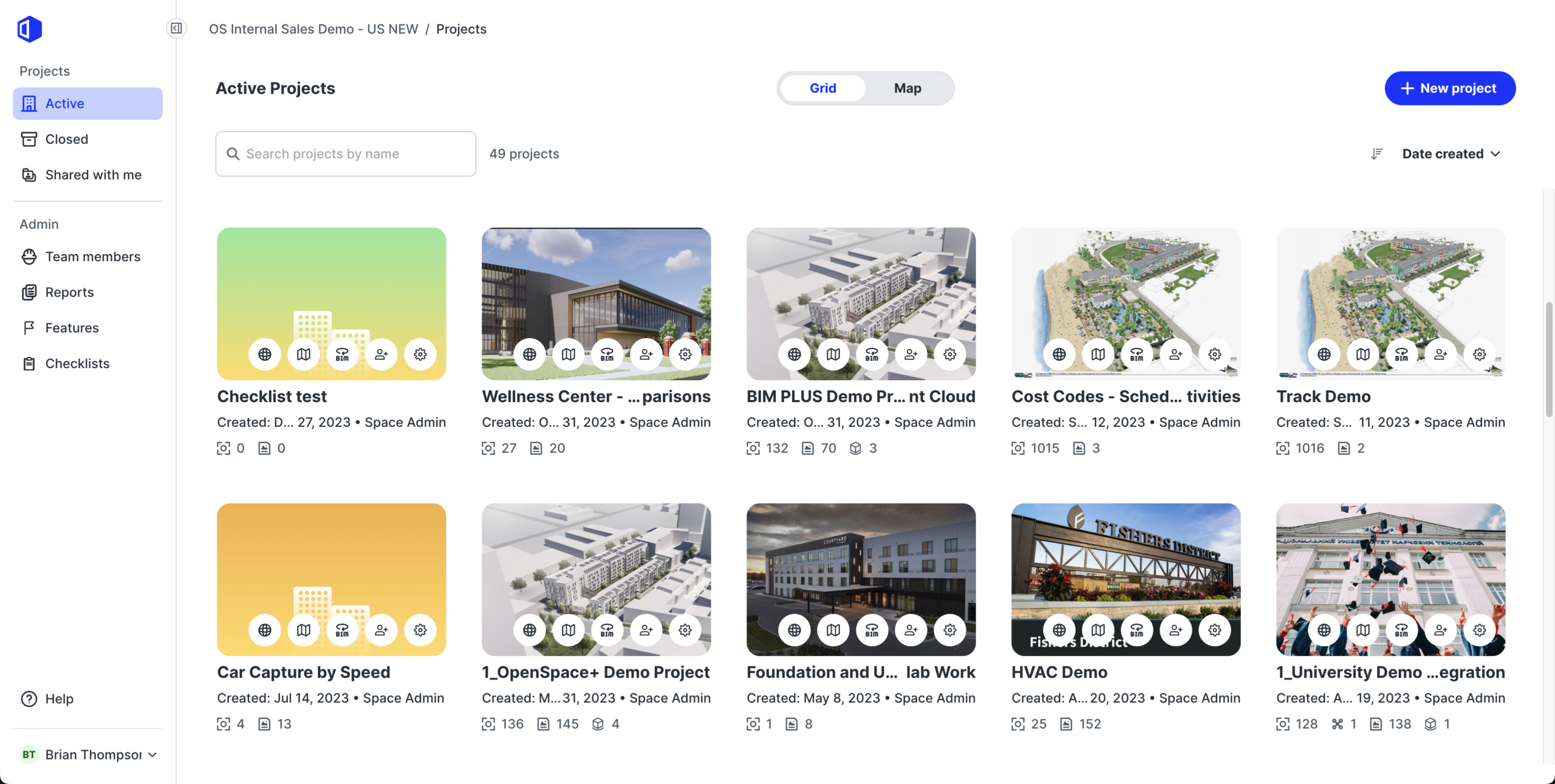
Owners investing in large commercial, mixed-use, or data center projects often cannot visit a site frequently, especially when projects span multiple geographies. They rely on progress reports produced by the GC, with no independent way to verify work in place before releasing a payment application.
A structured visual record changes this dynamic. OpenSpace remote work use case shows documented outcomes, including a 50 percent reduction in travel costs. When time-stamped visual documentation covers the full project lifecycle, liability risks become measurable and defensible.
Builders using OpenSpace have reported a 41 percent reduction in insurance claims. Owners activating visual documentation as part of their risk management program have achieved a 15 percent reduction in insurance premiums through the Shepherd Insurance partnership.
Beyond insurance claims, a consistent visual record resolves disputes before they escalate. Construction theft, site access incidents, and damage events that might otherwise require costly investigation have a documented timeline that protects all parties.
See how OpenSpace gives owners independent project visibility—request a demo
How AI turns site imagery into actionable intelligence
Most construction sites generate more imagery than teams know what to do with. The harder problem is making it mean something.
OpenSpace Spatial AI Engine does that work at scale. Rather than requiring field teams to manually tag photo locations or sort captures into folders, the platform automatically locates every image on the floor plan and time-stamps it without any manual input. The result is a visual record that anyone can navigate by location, date, and trade without spending hours organizing files.
In the field, AI Voice Notes lets crew members speak observations out loud. The platform transcribes and populates the relevant fields automatically, so site activity gets recorded with full context instead of landing as an unlabeled photo in a shared drive.
On top of capture and documentation, AI-powered analytics surface what would otherwise require a trained eye to catch. Spotlights scan the visual record for potential rework candidates and out-of-sequence installs, generating instant alerts and operational insights before conditions escalate.
OpenSpace combines that AI-first detection with expert human review, so the intelligence that reaches project teams is reliable enough to act on, with a meaningful check on false alarms.
“The bar for AI in construction is not whether it can find something. It’s whether you can act on what it finds without going to verify it yourself. That’s the part most systems don’t get right. The detection has to be accurate enough that a project manager can make a call from their desk, and that means the human review layer is not optional, it’s the whole point.”
—Gabriel Denis-Arrue Munes, Product Manager, OpenSpace
The limits of remote monitoring without the right foundation
Remote video monitoring and visual documentation only deliver value when capture is consistent, structured, and accessible. A construction site where teams walk with cameras once a month produces a visual record full of gaps. Imagery that lands in shared folders without location context produces a library no one can navigate.
Builders managing high-risk jobsites (data centers, healthcare facilities, complex urban projects) may face additional constraints around site security and access control. OpenSpace captures conditions across critical areas without requiring dedicated live monitoring staff or in-house infrastructure. Cellular connectivity and cloud storage make the visual record accessible from anywhere, with no permanent infrastructure required on site.
Effective remote monitoring comes down to three things: a consistent capture cadence, a platform that structures what gets captured, and a workflow that makes the resulting intelligence available to the right people, wherever they are.
Frequently asked questions
What is the difference between remote construction site monitoring & traditional site documentation?
Traditional site documentation captures moments: a site walk, a batch of photos, a weekly progress report assembled from memory. Remote construction site monitoring creates a structured visual record, automatically mapped to the floor plan and searchable by location, date, and trade. The difference is not just how often captures happen, but what becomes possible with them: comparing conditions across dates, verifying work in place without travel, and surfacing deviations before they compound into schedule or cost problems.
How often should a construction site be captured for remote monitoring to be effective?
Capture frequency depends on the pace and complexity of the construction project, but consistency matters more than volume. Weekly walkthroughs give project managers a reliable baseline for tracking progress and identifying when conditions change. On fast-moving projects or during critical phases, more frequent captures give teams the granularity to catch issues before they escalate, with the compounding value of the visual record building over time rather than from any single walkthrough.
Can remote construction site monitoring replace site visits entirely?
Remote monitoring significantly reduces the number of site visits required but does not eliminate them. The goal is to make every visit purposeful: teams go on site to resolve flagged issues rather than to check general conditions. Builders managing multiple projects simultaneously find that remote visibility lets them prioritize where physical presence matters most, reducing unnecessary travel without losing the judgment that comes from being on the ground.
Construction project visibility has always been constrained by how much you could see on any given day. The builders who move fastest are the ones who have made the entire site visible, all the time, from any location. Remote construction site monitoring, built on consistent capture and structured visual intelligence, is how that visibility becomes operational rather than aspirational.
Ready to see what your site looks like without being on it? Request a demo of OpenSpace.