
A construction site inspection is a structured review of a jobsite that checks whether installed work meets quality standards, whether the site is safe, and whether the construction project matches the approved plans and applicable building codes.
Most builders already perform construction site inspections on a set cadence, often several site inspections a week. The harder question is what happens to each finding after the walkthrough ends, because a construction site inspection only protects a construction project when its findings reach the right people while they matter.
This guide focuses on that gap. The sections below cover the types of construction inspections, the stages, and a construction site inspection checklist. But most content skips the short, expensive window between spotting an issue and acting on it, which is where the construction site inspection process stops paying off.
Types of construction inspections
There are three types of construction inspections, and each serves a distinct purpose within the same inspection process. Reading these construction site inspections as separate jobs, rather than one review, shows where the inspection process is thin and where it can ensure compliance.
Safety inspections
Health and safety inspections identify potential hazards and safety hazards, confirm personal protective equipment is in use, and check that crews follow the safety protocols and safety requirements that keep a construction site incident-free.
Quality control inspections
Construction quality inspections assess workmanship and installed materials against project plans and industry standards. Good quality control inspections verify installed work matches the specification before finishes go up, and verify materials on delivery.
Compliance inspections
Building regulation inspections and structural inspections verify that work meets applicable building codes and local regulations, so the project clears regulatory compliance without costly surprises at handover.
Read together, quality and safety standards, and code compliance are not three disconnected reviews. Across the construction process, the strongest construction site inspections treat safety and quality standards, health and safety standards, and code checks as one continuous record.
Stages of a construction site inspection
Construction inspections run across the full life of a construction project, not only the construction phase, so site inspections happen at every stage. Each stage asks a different question of the same construction site:
Preconstruction
Inspectors assess site conditions, confirm the approved drawings and permits are in place. They document the starting state of the ground and neighboring structures. This baseline matters when anyone later questions what changed.
That baseline is usually the same topographic survey construction teams commission before design locks in, reused here as the reference point every later inspection measures against.
During the build
Regular site inspections track progress against project plans, verify installed work matches specifications, and flag safety issues before they escalate. This is where the highest volume of quality and safety inspections happens, and where site inspections have to keep pace as site conditions shift fastest.
Closeout & handover
The final inspection and the completion works handover inspection confirm that everything matches the contract documents, punch list items are resolved, and as-builts are turned over to the owner. Even in post construction, that record keeps earning its keep.
The thread running through every stage of the inspection process is the record. A finding from preconstruction only helps if it is still findable at closeout, which is exactly where paper forms and phone photos tend to fail.
Where inspections quietly lose their value
Site inspections lose their value in the gap between observation and action, not during the walkthrough itself. A superintendent can run a flawless construction site inspection and still watch the findings decay before anyone acts. That failure mode undermines otherwise well-run site inspections.
The usual pattern is: an inspector spots a problem on the jobsite, snaps a photo on a phone, and jots a note. The photo lands in a camera roll with hundreds of others, stripped of location and context, and the note goes into a message thread.
By the time project managers compile the weekly report, the information is stale, hard to locate on the plan, and difficult to pin to a responsible subcontractor. Corrective actions slip because no one can prove exactly what was seen, or where.
Research from the Construction Industry Institute puts direct rework at roughly 2 to 20 percent of total project cost, and much of that traces back to potential hazards and defects seen early but never captured in a way that drove action.
“The inspection is rarely the problem. A good super finds the issue on the walk. Where it falls apart is the next four hours. The photo goes in a phone with three hundred others, the note goes in a text, and by the time anyone looks, nobody remembers which unit it was on or which trade to call. The finding was real. The follow-through is what got lost.”
—Wesley DuBose, Product Manager, OpenSpace
A construction site inspection checklist
A construction site inspection checklist keeps a walkthrough consistent from one inspector to the next, and gives every finding a place to live. Standardized inspection checklists also let a builder baseline current conditions, spot recurring problems, confirm safety precautions are in place, and measure whether quality management is improving over time.
The best inspection checklists map to project scope, building codes, and the specifications that a construction site inspection has to verify.
A practical site inspection checklist usually covers:
- Permits, approved plans, and regulatory documents on file
- Site access, housekeeping, and general site safety conditions
- Required protective gear and posted safety requirements
- Installed work checked against specifications and quality standards
- Materials delivered and materials in use
- Structural inspection points and foundation inspection sign-offs
- Field testing and testing equipment calibration
- Open punch list and completion works ahead of the handover inspection
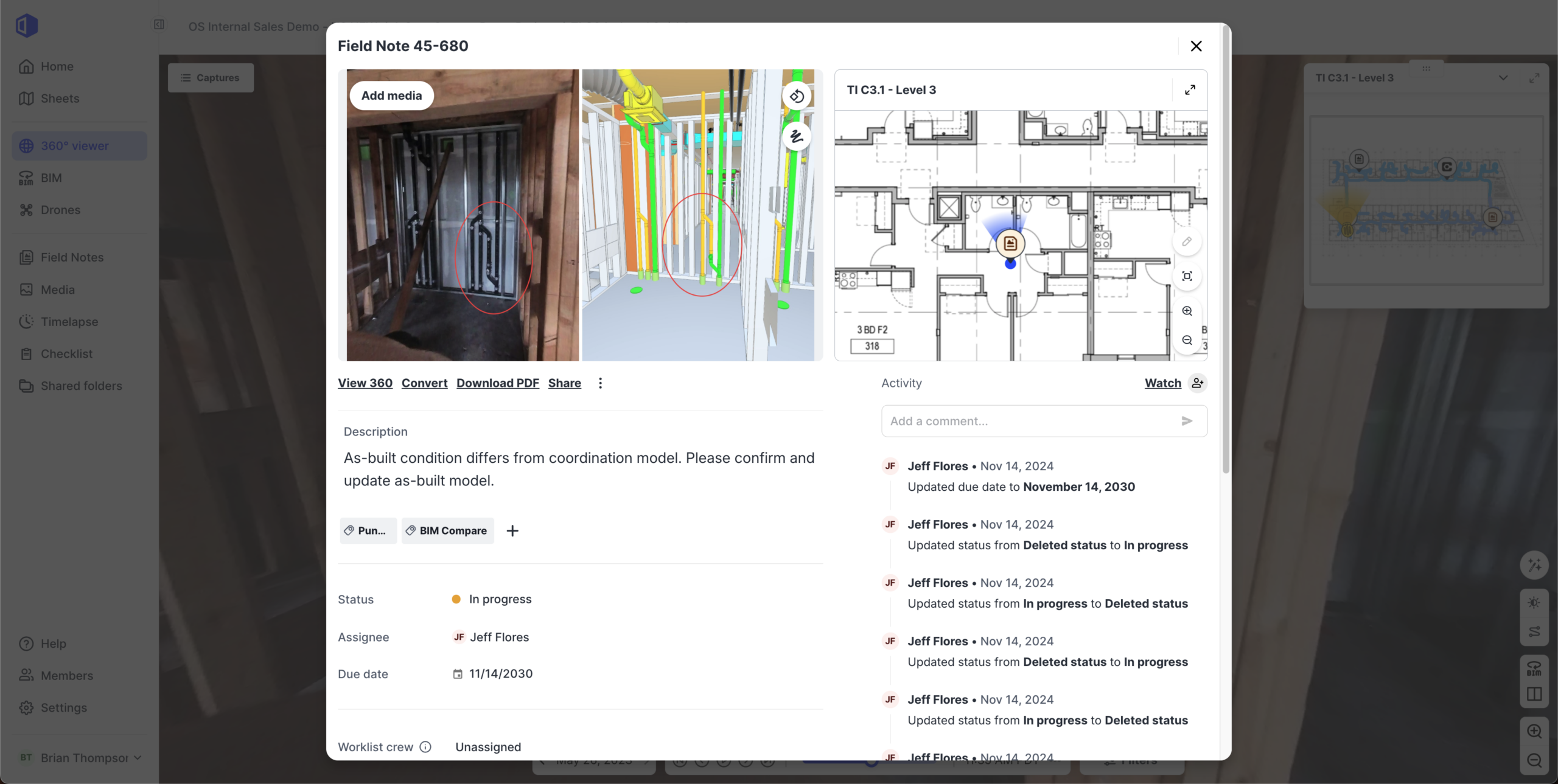
Good inspection checklists are only half of any construction site inspection. Thorough inspection checklists and quality control inspections ensure findings are consistent, but what separates a strong program is capturing each item with enough context, a location, a time-stamp, and an owner, so it can be acted on without a follow-up conversation. Structured site inspections ensure nothing gets lost between the walk and the report.
Best practices for construction site inspections
The best practice that changes outcomes is capturing every finding in context the moment it is observed, so nothing has to be reconstructed later. Applied consistently, it reshapes the construction process around site inspections that produce action. A few habits make construction site inspections and routine quality inspections hold up, whether a crew runs a handful of site inspections a day or a dozen:
- Capture the finding where it happens. Log the issue against the plan on-site, not back at the trailer hours later.
- Give every finding a location. A note pinned to the floor plan removes the debate about where a problem actually is.
- Assign ownership immediately. Tag the responsible subcontractor so corrective actions start the same day.
- Standardize tags and categories. Consistent tagging turns individual notes into patterns a team can manage, which is the foundation of both quality assurance and risk management.
- Report from the live record, not memory. When the record updates as the walk happens, the weekly report writes itself.
Gap Insaat, an international EPC contractor, put these construction inspections into practice on a landmark Istanbul project. Inspectors swapped phone photos and messaging apps for a 360 camera and logged observations directly in OpenSpace Field, which manages punch and QA/QC from the field.
Each note was pinned automatically to the floor plan with an image, a category, and a responsible party. The result, documented in Gap Insaat’s safety reporting case study: weekly reporting that once took a full workday dropped to near zero, and documented safety observations rose eightfold, from an average of 0.5 per day to 4 per day.
“The first thing that changes is the arguing stops. When every note is pinned to the plan with a photo and a time-stamp, there’s nothing to debate at the OAC meeting. What surprises teams is the volume. When logging an issue takes fifteen seconds instead of writing it up back at the trailer, people actually log the small stuff. And the small stuff is what turns into rework if it sits.”
—Wesley DuBose, Product Manager, OpenSpace
Request a demo to see how OpenSpace captures inspection findings in the field.
How inspection findings become project intelligence
Individual findings become project intelligence when every capture is located, time-stamped, and connected to the rest of the visual record. One pinned note answers a single question. A full season of captures answers questions no one thought to ask at the time, giving project teams a way of tracking progress no checklist can.
That visual record turns routine site inspections into something a team can revisit, and it is what makes visual QA/QC inspections and as-built verification defensible months later. When an owner disputes installed work or a subcontractor contests a backcharge, the team stops debating whose version is correct and looks at the record.
The same captures that supported a safety inspection in month three support a schedule claim in month nine. Regulatory framing reinforces the point: OSHA’s construction standards require frequent and regular inspection of jobsites by a competent person, and a located, time-stamped record is the cleanest way to show competent persons inspected conditions on the expected schedule.
Handled this way, a construction site inspection feeds inspection software instead of a camera roll, and everyday construction operations become a body of evidence rather than a pile of loose photos. Inspection software keeps every construction site inspection searchable long after the crew has moved on, and a construction site inspection app puts that record in the crew’s hands.
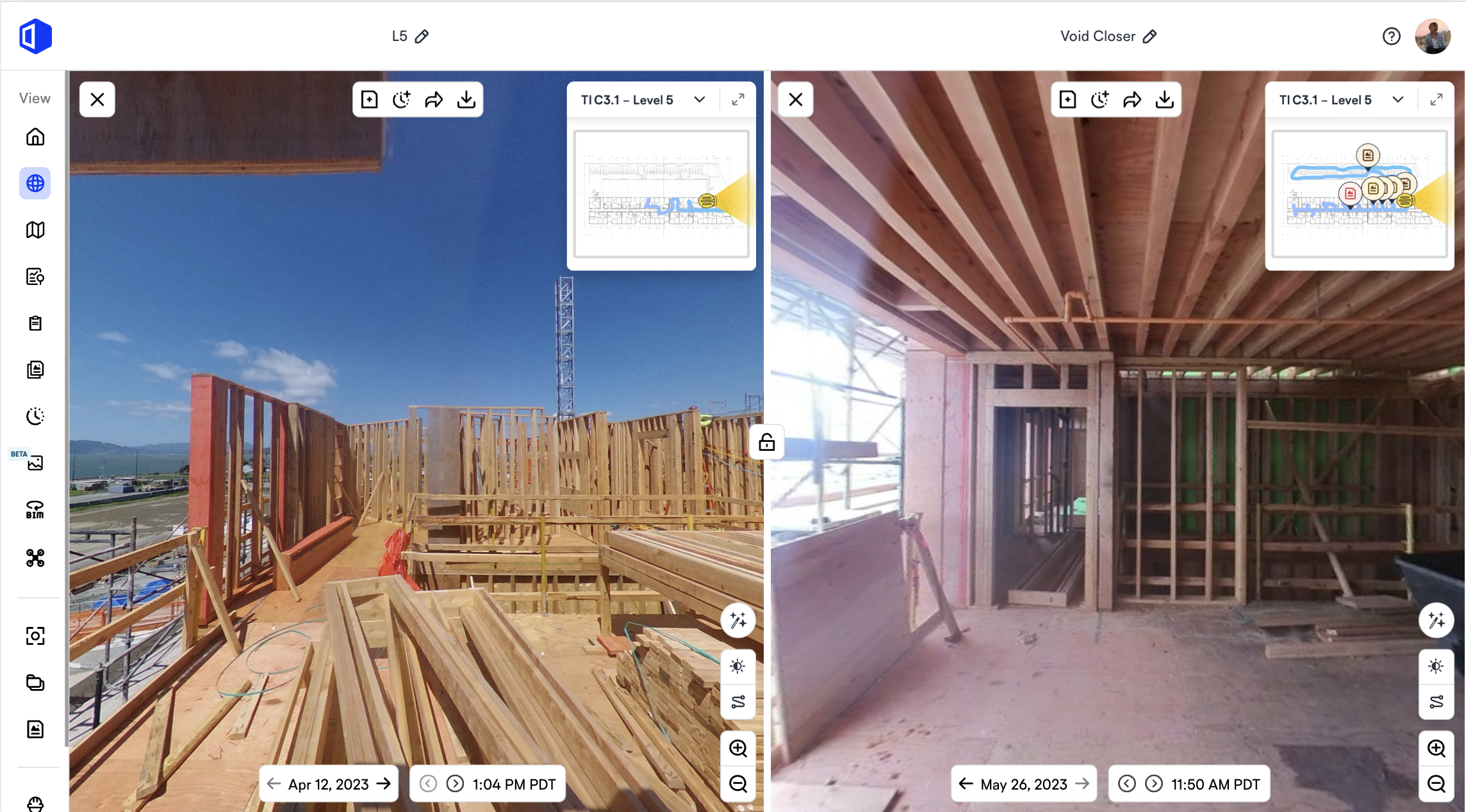
“A photo by itself is just a picture. What makes it defensible is knowing exactly where it was taken and exactly when. Six months later, when an owner questions installed work or a sub disputes a backcharge, you pull up the capture from that date and that location. Nobody argues with the record. That’s the difference between a camera roll and evidence you can stand behind at closeout.”
—Wesley DuBose, Product Manager, OpenSpace
Frequently asked questions
How often should construction site inspections be conducted?
Most builders run daily safety checks, a more formal weekly construction site inspection, and additional site inspections after major milestones such as foundation or structural completion. Frequency should rise with risk, so high-hazard phases and fast-moving site conditions warrant more frequent site inspections. Many teams also add regular inspections whenever conditions change materially on site.
Who is responsible for conducting a construction site inspection?
Responsibility depends on the inspection type. Superintendents and project engineers typically perform inspections for quality and progress, dedicated safety managers run health and safety inspections, and building officials from local authorities or third party inspectors handle building regulation inspections. On multi-employer sites, general contractors and subcontractors share responsibility for the conditions their crews create.
What is the difference between a site inspection and a site audit?
A site inspection is an operational review of current conditions, usually focused on immediate safety, quality, and progress. A site audit is a broader, less frequent evaluation of whether a project’s systems and processes meet defined standards and client expectations. Put simply, construction inspections check the work, and audits check the process that governs it.
Request a demo or contact OpenSpace to see how a visual record turns everyday inspections into intelligence your team can act on and defend.