OpenSpace helps safety teams document a jobsite inspection while they walk it: a 360° capture records the whole route, Field Notes pin hazards to the floor plan with photos and assignees, and a filtered PDF report goes out without anyone retyping notes. Rolling OpenSpace into your process adds organization and visuals that deliver safer working environments and peace of mind.
For fire protection contractors, the ability to simplify safety documentation is especially important because inspectors need to verify that sprinkler and piping installations met code before the ceiling closes, and having that record on hand eliminates guesswork during reviews.
How do you use OpenSpace during a safety inspection?
You walk the site the way you already do, with the capture running in the background. A 360° capture records the full route while you focus on what you are actually looking for, so the walk itself produces the documentation instead of requiring a second pass. The practical shift is that the inspection and the record happen at the same time, rather than one being reconstructed from the other.
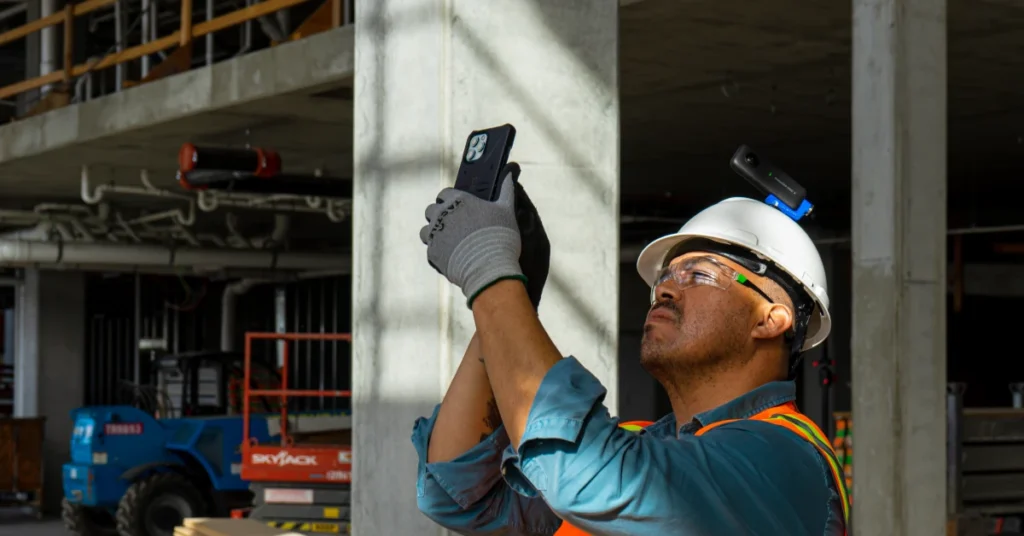
You are the safety expert—OpenSpace is here to make your job easier. Taking an OpenSpace 360° video capture while you’re conducting a safety inspection means you can focus on the inspection, knowing that the entire walk will be documented.
What can you record in a Field Note?
A Field Note captures the hazard and everything needed to resolve it, in one place, without stopping the capture.
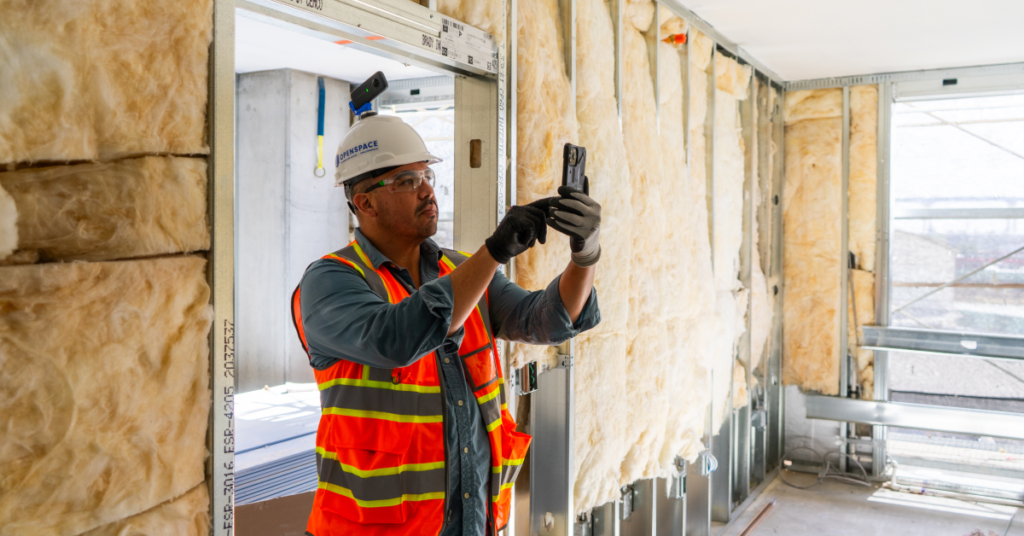
As you spot hazards or other issues that need to be addressed during your inspection, the Field Notes feature is ready to assist. You can create a Field Note anytime during your capture—the capture won’t be interrupted. Simply tap the Field Notes button in the OpenSpace app on your smartphone and snap a photo. Each Field Note can include:
- A description of the hazard or observation
- Markup drawn directly on the photo
- Comments from anyone on the project team
- A status, so you can see what is open and what is closed
- Tags such as “Tripping Hazard” for filtering later
- An assignee, who is notified right away
OpenSpace automatically timestamps and pins these notes to your floor plan. With Field Notes, it’s easy to filter and find your safety items later.
Logging safety observations as you capture the walk means the record is built by the time you are back in the trailer, instead of pieced together later from memory.
How do you turn safety observations into a report?
You filter the Field Notes you want and generate a PDF straight from OpenSpace — no retyping, no digging back through texts. Because the observations were logged during the walk, the report is a selection exercise rather than a writing exercise.
Since you documented everything you observed in Field Notes, you don’t have to manually type up a safety report or look back through notes or texts to share your findings with the right people. Instead, you can generate a PDF report from OpenSpace, filtered to gather the Field Notes you want and complete with comments and attachments (including any additional images you added to your Field Notes).
Safety walks and quality walks end up feeding the same record, so a single capture can support both reports.
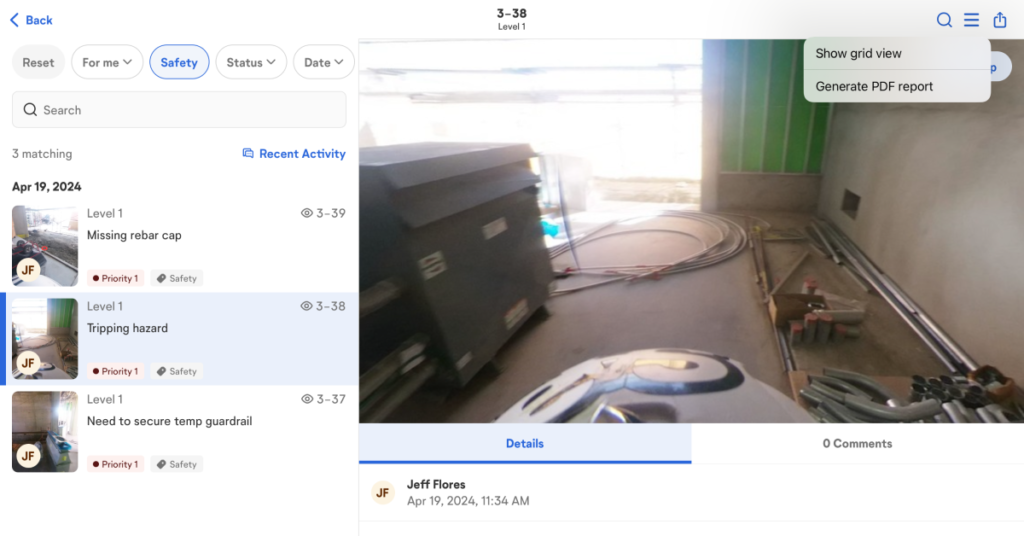
Field Notes reports offer clear, visual communication you can use to:
- Help organize and streamline your safety plans.
- Alert project team members about items they need to deal with, such as debris they’re responsible for removing.
- Easily share examples of good safety habits with the company.
- Flag recurring observations to prevent incidents.
Can safety managers monitor a jobsite remotely?
Yes. Anyone with access can open a capture from anywhere and look around the site as it stood on the day of the walk, which matters most on projects a safety manager cannot reach weekly. Remote review does not replace being on-site, but it closes the gap between visits so hazards are not sitting unseen for a month.
In addition to using OpenSpace for safety inspections on-site, remote safety teams can pull up 360° captures from anywhere to see what’s happening on a project. In one of our favorite Waypoint customer summit sessions, we had the opportunity to talk with Suzy Garcia, Safety Manager at Humphrey Rich (HR) Construction Group, about her “aha moment” with OpenSpace after she was added to a project located on the other side of the country.
Suzy’s responsibility is to ensure safe working environments on HR’s jobsites. She told us, “Every time there was a capture, I would look at it and I’m thinking, oh my gosh, hang on a minute. And I became the queen of twirling the capture so I could see what was going on.” She was spotting things that needed fixing—and then she discovered the power of using Field Notes to facilitate resolving those issues.
Equipped with these new capabilities, Suzy put a process in place to avoid coming across like “big brother.” For example, subcontractors on HR’s projects know to expect Suzy’s Field Notes, complete with visuals. And they understand the goal is to ensure clear and effective communication. And safer jobsites. She plans to implement this process across the board on all projects.
“OpenSpace has truly become my safety partner. I kid you not. It gives me 360 eyeballs that I wish I had around my head when I’m on a jobsite. OpenSpace does that for me.” -Suzy Garcia
With consistent capturing, OpenSpace delivers imagery and information that help you:
- Stay on top of construction safety when you can’t be on-site.
- Reference if an incident occurs.
- Improve follow-up on safety hazards that need to be addressed.
- Keep jobsites cleaner and safer, preventing workplace accidents.
- Train safety and field team members (by reviewing safety issues flagged in OpenSpace).
Frequently asked questions
Does OpenSpace replace a safety management system?
No. OpenSpace documents what the site actually looked like and routes observations to the person responsible; it does not manage training records, certifications, or incident filings. Most safety teams run it alongside whatever system already holds their program, using the visual record as the evidence layer underneath it.
How is a safety Field Note different from a punch list item?
A punch list item tracks work that still needs to be finished. A safety Field Note flags a condition that creates risk right now — blocked egress, missing guardrail, debris in a walkway — and usually needs resolving the same day rather than at closeout. Tagging them separately keeps safety items from being buried in a long punch list.
How often should you capture a site for safety purposes?
Match the capture cadence to your existing inspection cadence rather than adding a separate schedule. If your team walks weekly, capture weekly; the value comes from the interval being consistent, so you can compare the same area over time and see whether a recurring hazard is actually being resolved.
Dive Deeper into Facilitating Safety with OpenSpace
Check out our Safety use case page for more information on how you can use OpenSpace to supplement your safety processes and mitigate risk on your construction projects.
If you’re not a customer, we’re happy to give you a quick demo to show you the many use cases for OpenSpace—click here to schedule.