Suffolk manages some of the most complex, sophisticated projects in the country, serving clients in every major industry sector, including healthcare, life sciences, education, gaming, transportation/aviation, government and public work, mission critical, advanced technology and commercial. Suffolk is privately held and is led by Founder, Chairman and CEO John Fish. Suffolk is ranked #8 on ENR’s list of “Largest Domestic Builders” and #10 on its list of “Top CM-at-Risk Contractors.
Four core capabilities
OpenSpace and Suffolk are entering the next chapter of a long-standing partnership: building on best-in-class reality capture toward a more standardized and interconnected approach to jobsite intelligence.
This phase focuses on four core capabilities: reality capture, OpenSpace Air, OpenSpace Field, and OpenSpace Track. Specifically, the teams are connecting how they work together to support consistent, repeatable workflows across Suffolk’s portfolio. The intent is not to introduce “more tools,” but to clarify how existing and emerging capabilities align with Suffolk’s operations playbook. By embedding OpenSpace into Standard Operating Procedures (SOPs), reinforcing champion-led adoption, and maintaining a people-first mindset, Suffolk is positioning OpenSpace as a single, connected platform for enabling site intelligence at the project, regional, and portfolio levels. Suffolk even measures adoption of OpenSpace capabilities across these levels. OpenSpace adoption continues to scale across Suffolk’s national portfolio, demonstrated by 33% growth in active projects, 41% growth in users, a 69% increase in captured 360° imagery, and a 570% surge in Field Notes year over year.
Why this next phase in the Suffolk & OpenSpace partnership
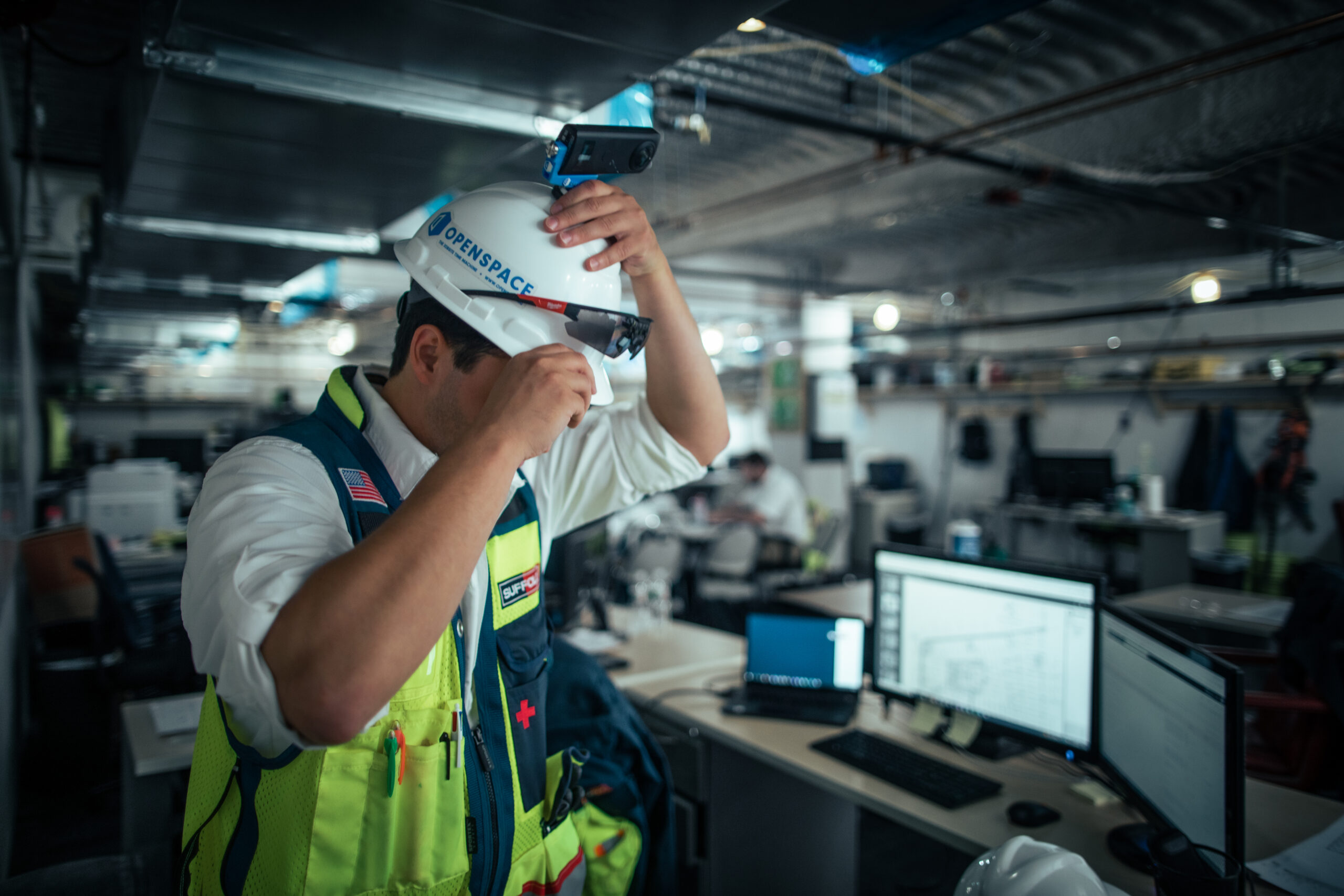
Suffolk has already achieved a high level of maturity with ground reality capture. As part of its proven technology platform and standard tech toolbox, OpenSpace is a core solution expected on every job to capture comprehensive site documentation at least every two weeks. It’s widely deployed, consistently used, and trusted as a source of visual truth across teams. That foundation drives alignment, transparency, and confidence in how site conditions are documented and shared.
As Suffolk continues to scale nationally, the focus is shifting from simply capturing visual data to putting that data to work. Ground and aerial imagery alone is no longer enough—what matters is what happens after capture. The priority is now standardizing how teams use visual data, embedding consistent workflows at the right moments in the project lifecycle, and turning those captures into action.
Importantly, this effort now begins earlier in the project lifecycle. OpenSpace has been made available to Suffolk Preconstruction teams to ensure true end-to-end documentation of existing conditions with greater rigor. By capturing and structuring site data earlier, Suffolk is improving estimating accuracy, strengthening pricing confidence, and reducing downstream risk.
Capabilities like OpenSpace Field and OpenSpace Track provide the “why” behind the “what” of using OpenSpace. They connect visual truth to accountability, workflow execution, and measurable progress, transforming documentation into performance.
This next phase of the partnership focuses on:
- Connecting capture to downstream workflows to action.
- Embedding OpenSpace into SOP‑driven workflows.
- Expanding beyond documentation into progress tracking and recovery.
- Maintaining a people‑first approach as capabilities evolve.
The four-pillar framework
Pillar 1: Reality capture
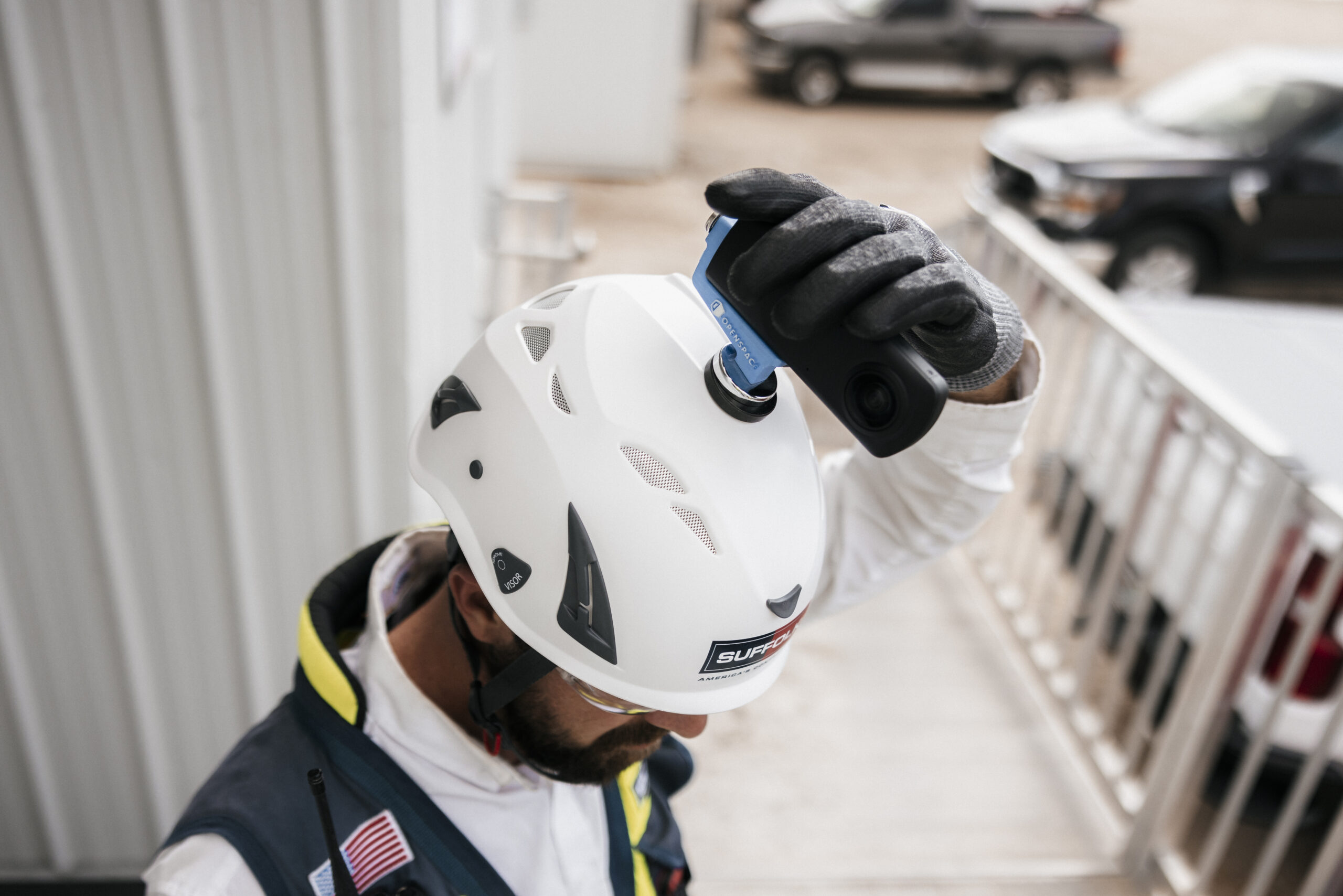
Reality capture is the cornerstone of Suffolk’s OpenSpace deployment. Teams rely on consistent visual documentation to establish site truth, align stakeholders, and reduce ambiguity throughout the project lifecycle.
Where it fits
- Regular capture cadence aligned with project rhythms
- Used for coordination, owner communication, and documentation
- Serves as a shared reference point across teams and regions
What maturity looks like at Suffolk
- Consistent usage across projects
- Clear ownership and expectations
- Integration into day‑to‑day decision‑making
Result
- Stronger alignment between field and office teams
- Less reliance on memory or manual site walks
- Greater confidence in project conversations, supported by clear documentation of next steps, follow-ups, and resolution—creating an end-to-end environment for documentation, action, and accountability
“OpenSpace has made a tremendous difference on our projects. It dramatically reduces the time we spend searching for historical conditions—you can access project history with a click instead of scrolling through hours of photos. We’re capturing the project as we build it, which has significantly improved our documentation. It’s a complete tool that we use in countless ways, and it easily saves us 5–8 hours every week.”
Pillar 2: OpenSpace Air
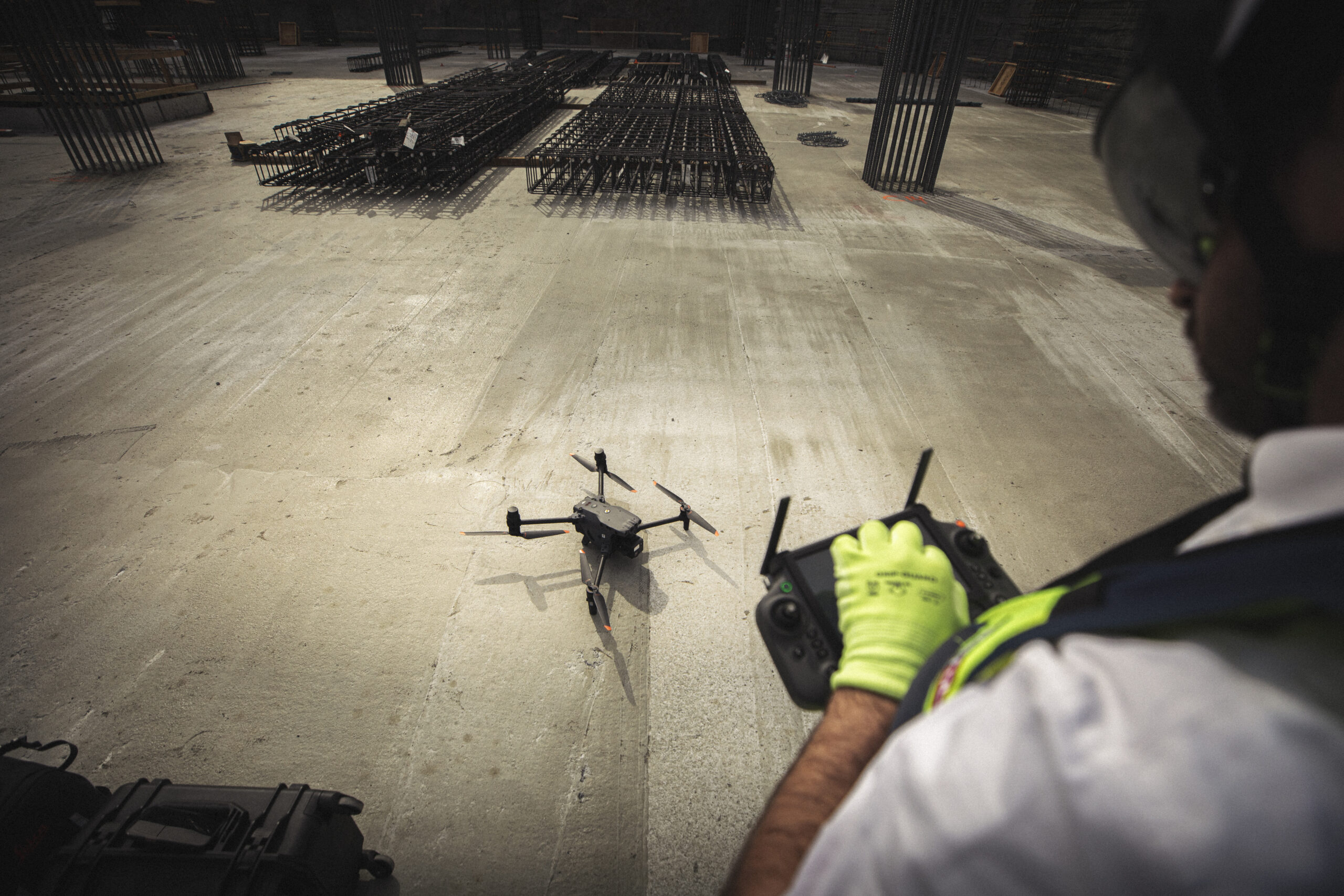
Complementing ground-based reality capture, OpenSpace Air adds drone imagery to Suffolk’s site intelligence strategy for more complete visual and spatial context. By stitching together aerial captures into interactive 3D orthomosaics, OpenSpace Air enables teams to see current conditions across the full site in a single, navigable view.
OpenSpace Air and OpenSpace Capture are complementary capabilities. Ground capture provides detailed, immersive documentation at the field level, while OpenSpace Air delivers site-wide visibility and context. Together, they create a more complete understanding of project conditions—supporting logistics, sequencing, coordination, and strategic decision-making at scale.
Where it fits
- Broader site visibility, interior and exterior
- Progress validation on large or complex sites
- Easily accessible up‑to‑date site views without additional site coordination
Current focus
- Expanding adoption where OpenSpace Air adds clear value
- Aligning capture practices with existing workflows
- Ensuring outputs are easily consumable by field and project teams
Value to Suffolk
Drone capture is already widespread—and often expected—across Suffolk’s portfolio. Bringing OpenSpace Air into its site intelligence strategy builds on that foundation by not only capturing aerial imagery, but automatically processing and organizing it within the same platform as ground capture, observations, and progress tracking.
This in-platform approach allows capabilities to cluster and work together, creating a more connected workflow from capture to action. From logistics planning and model validation to stakeholder communication and progress tracking, OpenSpace Air ensures aerial capture is not a standalone activity, but an integrated, operational input across the business.
“OpenSpace Air gives us a true bird’s-eye view of the entire site. Instead of piecing together progress from multiple sources, we can see everything at once—foundations, superstructure, logistics, materials—and even overlay our models to verify what’s been installed. It allows us to make faster, more informed decisions and communicate progress clearly to our teams and clients.”
Pillar 3: OpenSpace Field
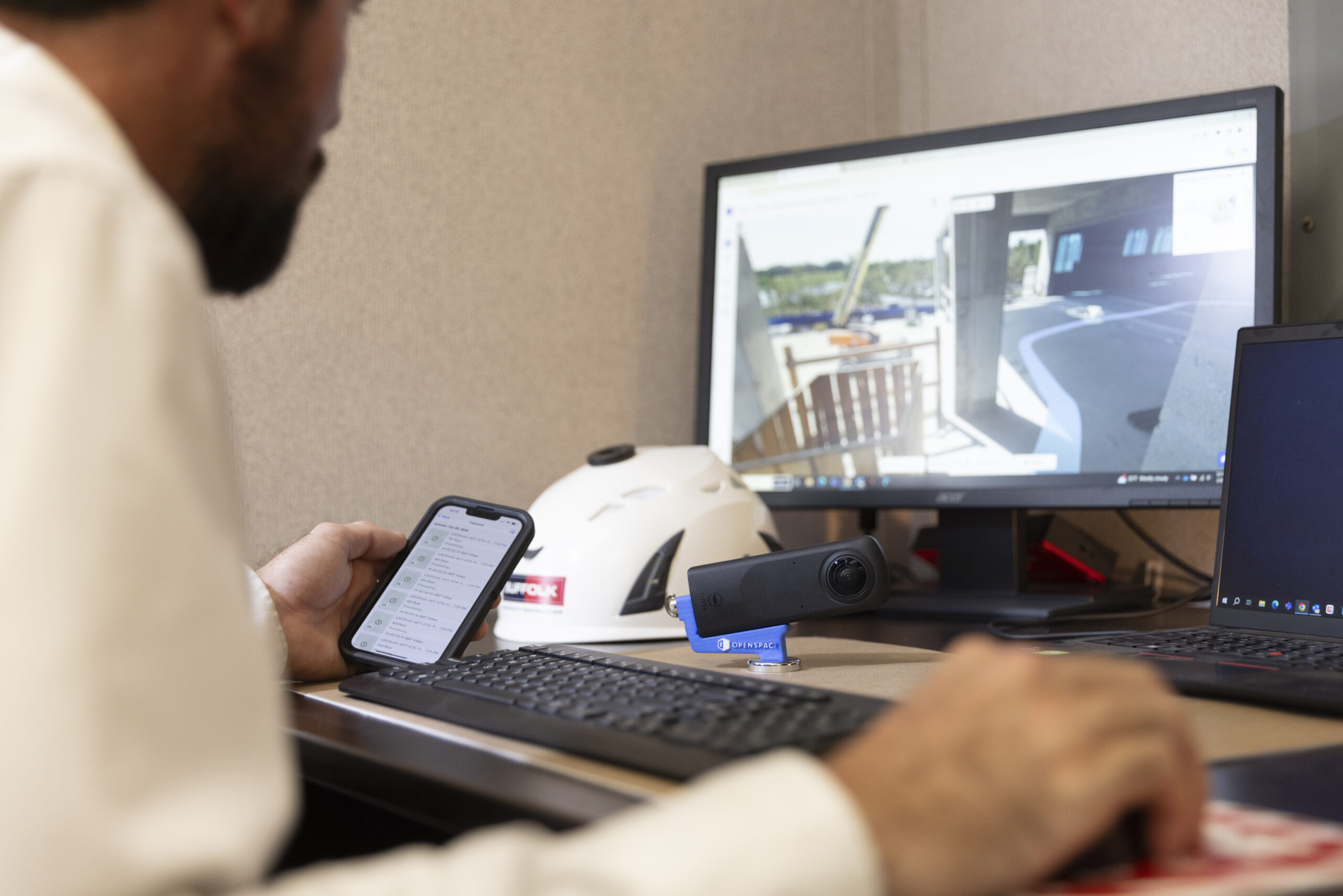
OpenSpace Field represents a shift from documentation as a byproduct to documentation as an intentional, standardized workflow. The question for Suffolk isn’t whether Field Notes are being captured, but how consistently they’re built into standard workflows.
“Using Field Notes and voice dictation through OpenSpace Field cuts time in half compared to other construction management software. I snap a picture, hit the microphone, describe the issue, assign it—and at the end of my walk it’s all sitting in draft form ready to send. Other construction management software has so many keystrokes just to log one observation. OpenSpace Field just gets out of the way. And I’ve actually gotten fewer questions from trade partners about what exactly I’m looking at. The location context, the photo, the voice note—it’s all right there. They know exactly where to go and what to fix.”
There are two possible paths:
- OpenSpace Field as an optional tool teams use independently, or
- OpenSpace Field as a defined component of standard workflows
Suffolk is actively working toward the latter.
Where OpenSpace Field fits
- Punch and closeout activities
- QA/QC documentation
- Issue tracking tied directly to visual context
Outcome
- Clearer accountability
- Faster resolution loops
- Reduced information loss between field and office
Pillar 4: OpenSpace Track
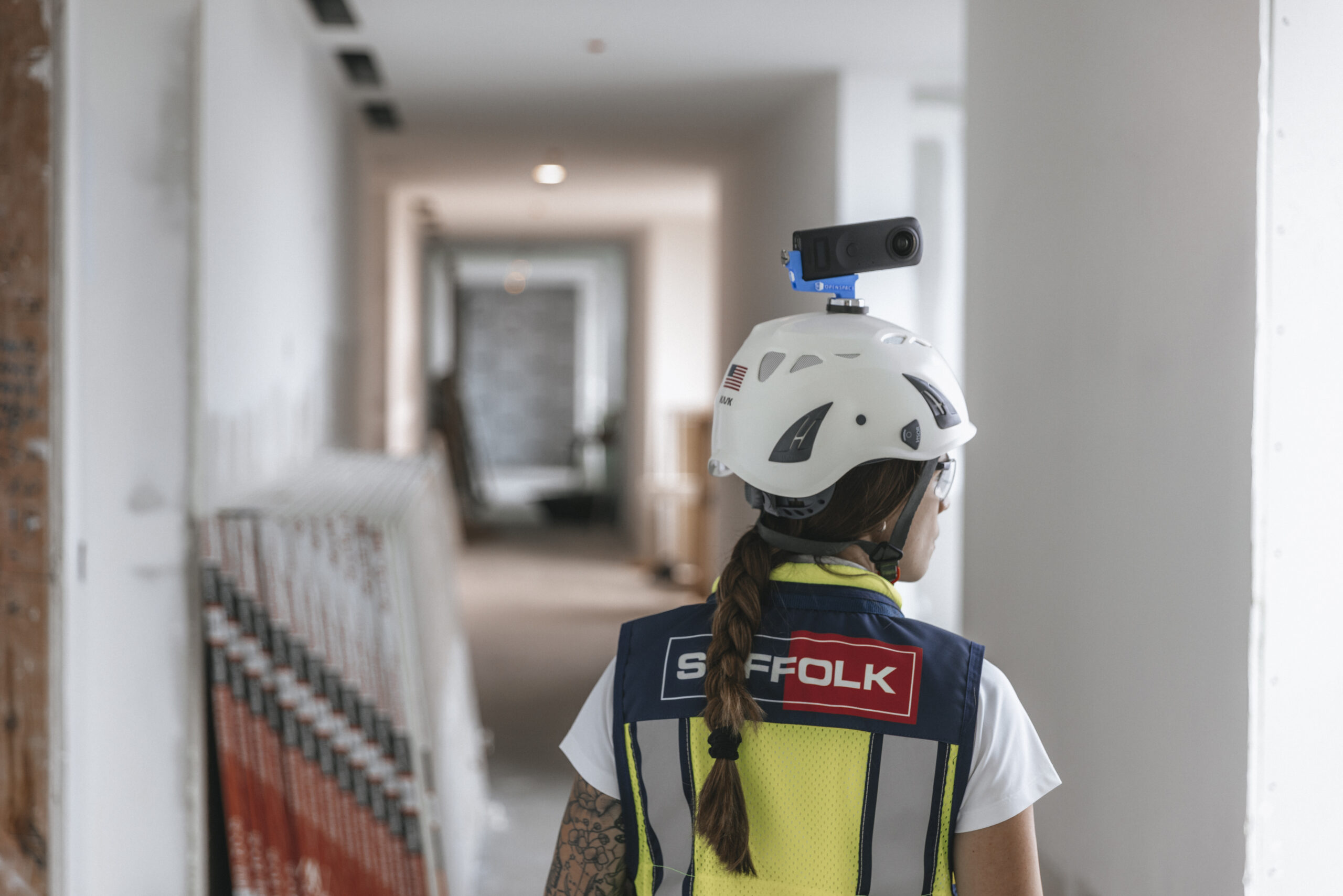
OpenSpace Track represents a strategically important evolution in the partnership. The focus is on connecting visual truth to measurable progress.
While reality capture establishes visual truth, OpenSpace Track connects that truth to measurable performance, transforming what is seen on-site into standardized, repeatable data. It enhances every pillar, helping teams understand the insights from collected data and assisting in closing the loop.
What OpenSpace Track enables
- Consistent, automated progress reporting
- Standardized trade and tasks definitions
- Structured quantity tracking tied to visual validation
- Clear visibility into recovery and sequencing risk recovery
- Reduced reliance on subjective reporting
OpenSpace Track continues to mature through a strategic partnership, with Suffolk defining practical requirements and helping prioritize the capabilities that drive measurable project performance. The goal is not more reporting, but standardized and automated reporting.
People‑first approach
Importantly, technology does not replace field judgment. Teams still validate installations and confirm readiness. What OpenSpace Track provides is a structured, repeatable framework that makes those validations scalable across projects to enhance Suffolk teams.
“Technology is not magic. It’s powered by people.”
A deliberate path to scale
Suffolk and OpenSpace are taking a disciplined approach to deploying OpenSpace Track—validating workflows in real field conditions before scaling across the portfolio. The process includes:
- Early-stage implementation on a live project.
- Close collaboration between Suffolk field teams and onboarding leads, including the owner.
- A focus on practical, field‑validated use cases.
- Testing task structures and reporting formats.
- Embedding standardization across project buildings and workflows.
- Gathering structured feedback to refine repeatable workflows.
At this stage, the priority is learning and alignment—ensuring the tracking approach reflects real field conditions and integrates cleanly into existing project rhythms.
Next steps: from validation to portfolio readiness
The next phase will focus on formalizing what works and defining how it can scale consistently across projects. Without structure, data is noise; with consistency, it becomes signal. Predictability starts with standardization.
- Define a repeatable onboarding playbook for future projects
- Align tracking structures with schedule and cost frameworks
- Establish minimum viable tracking scope guidelines
- Define success metrics to evaluate broader rollout readiness
The goal is not rapid expansion, but disciplined scaling—ensuring that progress tracking is structured, consistent, and aligned with Suffolk’s operating model before broader portfolio adoption.
Standardization across the portfolio
One of Suffolk’s key differentiators is its ability to deliver a consistent project experience across regions and project types. OpenSpace plays a central role in that strategy.
By embedding OpenSpace into SOPs and reinforcing clear usage expectations, Suffolk is able to:
- Structure project data consistently.
- Reduce variability between teams.
- Support scalable reporting and insight.
“OpenSpace is now built into how we run OAC and coordination meetings. Whenever there’s a conflict or RFI, we go straight to OpenSpace for clarity.
Instead of guessing or opening up finished work, we can confirm what’s in place quickly and move forward with confidence.
It’s also strengthened our communication with owners. We walk them through captures weekly, particularly those who aren’t local, and they’ve come to expect that visibility. It’s built trust because they can see the project evolving in real time.”
Regardless of region or project type, how site intelligence is captured, documented, and acted on remains consistent—supporting predictability, accountability, and informed decision-making at scale.
“I can’t tell you how helpful OpenSpace has been for me on this project. With the jobsite’s remote location, I have used OpenSpace to not only keep everyone updated on the progress, but most importantly, make sure that the trades who are ‘up next’ can see for themselves that we are truly going to be ready for them. A battle that every GC painfully fights every day.”
Looking ahead: building the foundation for more predictable outcomes
As Suffolk continues to expand its site intelligence strategy, the impact extends beyond visibility and workflow alignment. Reality capture data, combined with observations and progress tracking, is creating a more complete and reliable project data foundation—supporting more predictable outcomes, stronger risk mitigation, and improved performance across the portfolio.
Suffolk is also preparing for the next wave of innovation by standardizing how their teams capture and use site data. Advanced analytics and AI capabilities depend on clean, consistent, and comprehensive data. Having OpenSpace as their unified platform for site intelligence, Suffolk is building the foundation needed to apply these capabilities more effectively in the future.
Together, this partnership is improving project delivery today while laying the groundwork for smarter, more data-driven construction tomorrow.