OpenSpace joined Hugh Seaton on the Constructed Futures podcast to explore how spatial AI is changing what is possible in construction. The episode covers how OpenSpace’s Visual Intelligence Platform captures site reality at scale, what it means for project teams to have a continuously updated visual record of a project and why the shift from document-based to reality-based AI represents the next major leap for the construction industry.
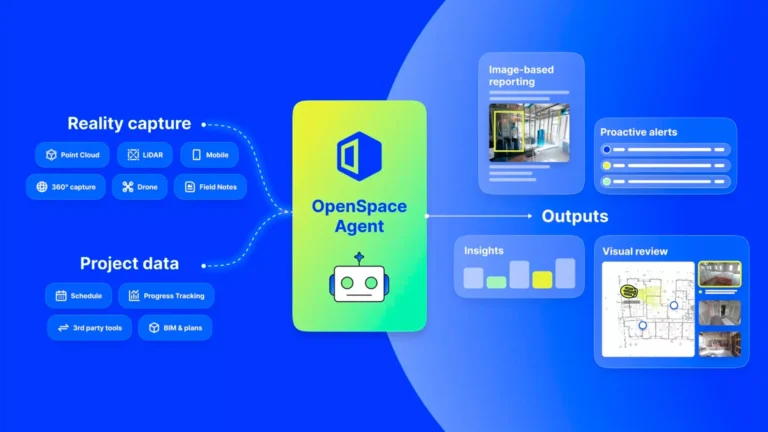
Constructed Futures focuses on the intersection of AI and the built environment, making it a natural home for a conversation about what OpenSpace is building. The core of that conversation is a straightforward but consequential idea: construction has always had sophisticated plans and models describing what was supposed to happen, but understanding what actually happened required people to go and look. OpenSpace changes that by turning site walkthroughs into structured, searchable visual data that project teams can access from anywhere. For customers managing complex projects across multiple sites, that shift from manual documentation to always-on visual intelligence is not incremental. It changes how risk is managed, how disputes get resolved and how quickly teams can identify and act on problems before they become costly.
The timing of this conversation reflects broader momentum in construction AI. As the industry grapples with labor shortages, schedule pressure and rising expectations around compliance and quality, tools that give project teams objective, up-to-date visibility into what is happening on site are moving from interesting to essential. OpenSpace’s approach: collect reality data continuously, make it universally accessible and apply AI to turn that data into answers, is gaining traction across general contractors, owners and developers worldwide. The platform now spans tens of billions of square feet of construction imagery, a dataset that is becoming the foundation for the next generation of spatial AI in the built environment.
By: Hugh Seaton