Unlock Risk Mitigation & Insurance Benefits with OpenSpace
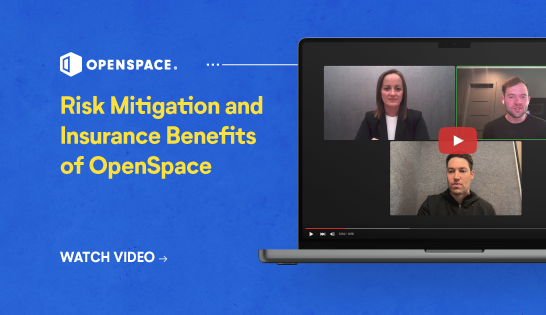
Watch this brief video for a conversation with Power Design, Inc. and Shepherd on risk and insurance trends in construction.
Watch nowInsurance premiums are a major cost for builders, but using OpenSpace can help. Consistently capturing with OpenSpace gives you a trusted visual record of your site to support construction risk management—helping lower your risk profile, reduce premiums, and prevent claims, all adding up to significant savings.
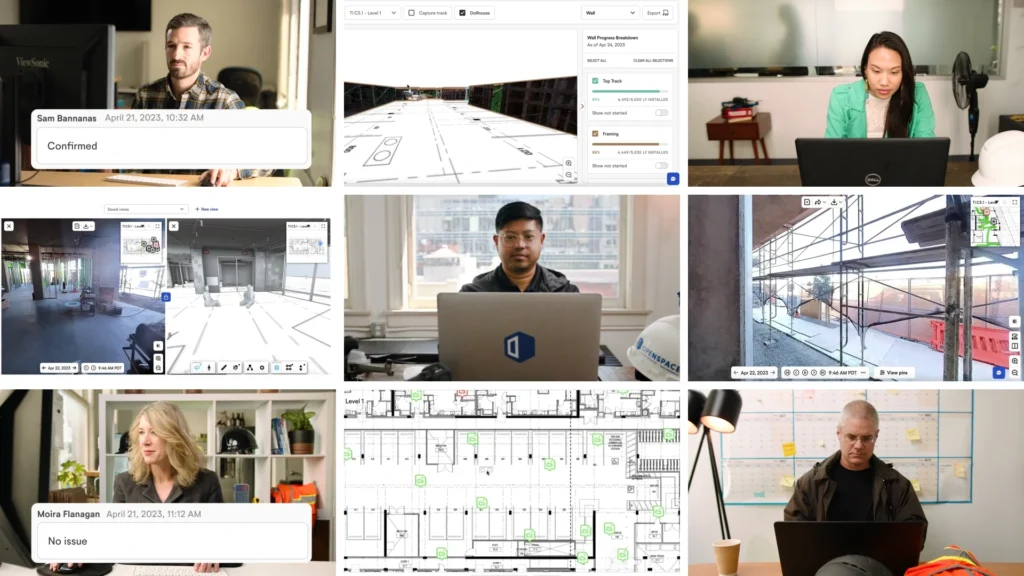
Learn how capturing with OpenSpace before and after Hurricane Ian helped DeAngelis Diamond recoup millions in insurance claims on a resort project.
Watch our Waypoint session for details on how Shepherd Savings can reduce insurance premiums and even cover the cost of OpenSpace.
At Waypoint, Performance Contracting Inc. shares how OpenSpace documentation submitted for a single claim covered a year of OpenSpace.
The most key [measure put in place before Hurricane Ian] was that our jobsite was properly photographed the week of the storm. I personally walked the entire site with the OpenSpace cameras on September 26th. …On October 12th I recorded the site again. This capture paired with my September 26th capture have been the two most utilized forms of documentation during the entire claims process.
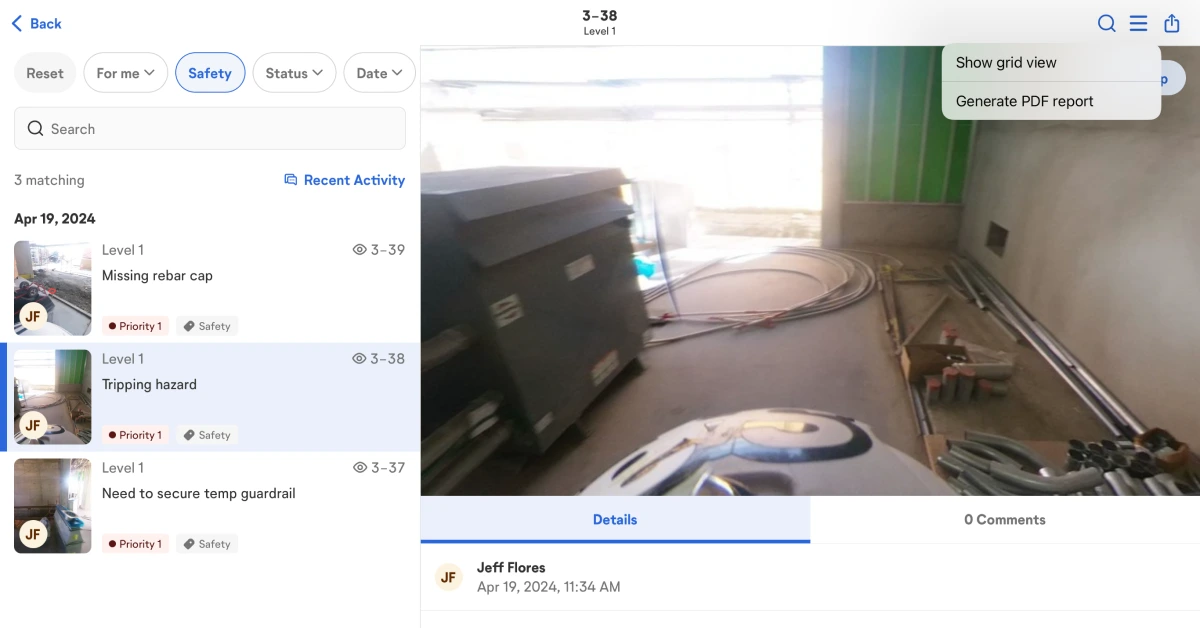
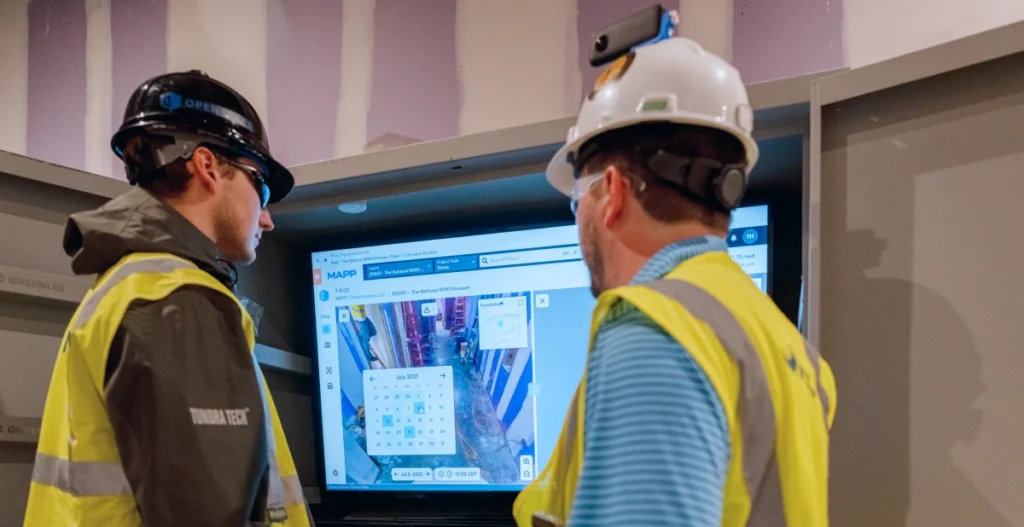
When you document your projects consistently with OpenSpace Capture you create safer jobsites and a visual record that can help demonstrate your risk management practices to insurers. Images provide insights to support informed safety decisions and keep projects on track. With OpenSpace Air you can capture drone imagery for an aerial view of site conditions. Together, ground-level and aerial imagery create a more complete visual record of your project.That complete record lowers your risk profile, which is why some insurers, including partner Shepherd, offer reduced premiums.


OpenSpace partners with technology-enabled insurance provider Shepherd to offer customers the Shepherd Savings program. Through its data partnership with OpenSpace, Shepherd found OpenSpace customers to be lower risk, with fewer claims and smaller losses. Qualified OpenSpace customers can save up to 25% on premiums through the program, helping offset the cost of OpenSpace. If you’re already an OpenSpace customer, contact Shepherd to see if your business qualifies.

Lorem ipsum dolor ist amte, consectetuer adipiscing eilt. Aenean commodo ligula egget dolor. Aenean massa. Cum sociis natoque penatibus et magnis dis parturient montes, nascetur ridiculus mus. Donec quak felis, ultricies nec, pellentesque eu, pretium quid, sem.
Insurers price premiums based on the likelihood and severity of future claims, so a strong, documented safety record directly influences that calculation. Consistent site inspections, hazard identification, and incident response records signal lower risk to underwriters and can qualify a contractor for better rates. Visual documentation strengthens this case by giving insurers verifiable proof that safety practices are followed on every job, not just claimed after the fact. Builders who maintain a consistent capture routine with OpenSpace build this proof automatically as part of their daily workflow.
Builders risk insurance covers physical damage to a structure under construction, including materials and equipment on-site, typically from events like fire, storms, or vandalism. General liability insurance covers third-party claims of bodily injury or property damage caused by the contractor’s operations, separate from the building itself. Most construction projects carry both policies because they address different categories of risk: one protects the asset being built, the other protects the business from liability claims. Review your contracts closely, since owners and lenders often specify which coverage types and limits a project requires.
Project managers who provide design input, scheduling judgment, or other professional recommendations can be named in claims alleging errors or omissions, which is exactly what professional liability insurance is built to cover. This coverage is separate from general liability or builders risk insurance, since it addresses claims tied to professional judgment rather than physical damage or bodily injury. Many general contracting and construction management companies carry this coverage at the company level, though some project managers also carry individual coverage depending on their role. Confirm with legal counsel or your insurance broker whether a client’s contract requires professional liability coverage for a specific role on the project.
Insurers and adjusters need dated, verifiable evidence of site conditions before and after the event that triggered the claim, along with a clear record of any safety measures taken. A time-stamped visual record, including photos, 360° captures, and Field Notes, gives adjusters what they need to assess damage without requiring a site visit for every step of the review. The faster a contractor can produce this evidence, the faster the claim moves. This is a large part of why OpenSpace customers report shorter claims timelines and fewer disputes over what a site actually looked like on a given day.
Contractual risk transfer shifts responsibility for certain risks from one party to another through contract language, indemnification clauses, or insurance requirements written directly into the agreement. In construction, this typically means subcontractors are required to carry specific coverage and name the general contractor as an additional insured, moving exposure away from the GC for risks tied to the sub’s scope of work. Owners apply the same mechanism with general contractors, requiring coverage limits and additional insured status before work begins. Reviewing contract language closely, and keeping documentation that supports compliance with these clauses, helps every party enforce the risk transfer they agreed to.