Construction AI puts machine learning and computer vision to work on the problems that slow projects down: automating repetitive processes, surfacing issues before they compound, and giving teams the clarity to make faster, more confident decisions on-site and in the office.
Construction project management faces a defining moment. The artificial intelligence market in construction shows remarkable growth potential—from $3.93 billion in 2024 to a predicted $22.68 billion by 2032. These numbers tell a compelling story about AI’s increasing role in reshaping how construction teams plan, execute, and deliver projects.
And the data speaks volumes about AI’s impact on core project management functions. Project teams using construction AI-powered tools report 58% gains in efficiency through automated expense tracking and resource optimization.
Construction projects require extensive planning phases which might span multiple years before breaking ground. Construction AI systems can process vast datasets from past projects, identifying patterns human managers might miss. The results? Sharper risk forecasts, better-informed decisions, and fewer costly surprises during execution. This shift marks a fundamental change in how construction teams can approach project planning and delivery.
How does AI improve planning & design in construction?
Most planning problems don’t start on-site. They start weeks earlier, perhaps in drawings that conflict or estimates that don’t hold—leading to decisions made without full information. AI changes where those problems get caught.
The construction industry wastes nearly 70% of its activities on non-value-added tasks. AI-assisted design systems tackle this directly; automating drawing set production, component identification, and code compliance verification so design teams can spend their time on work that actually requires their expertise.
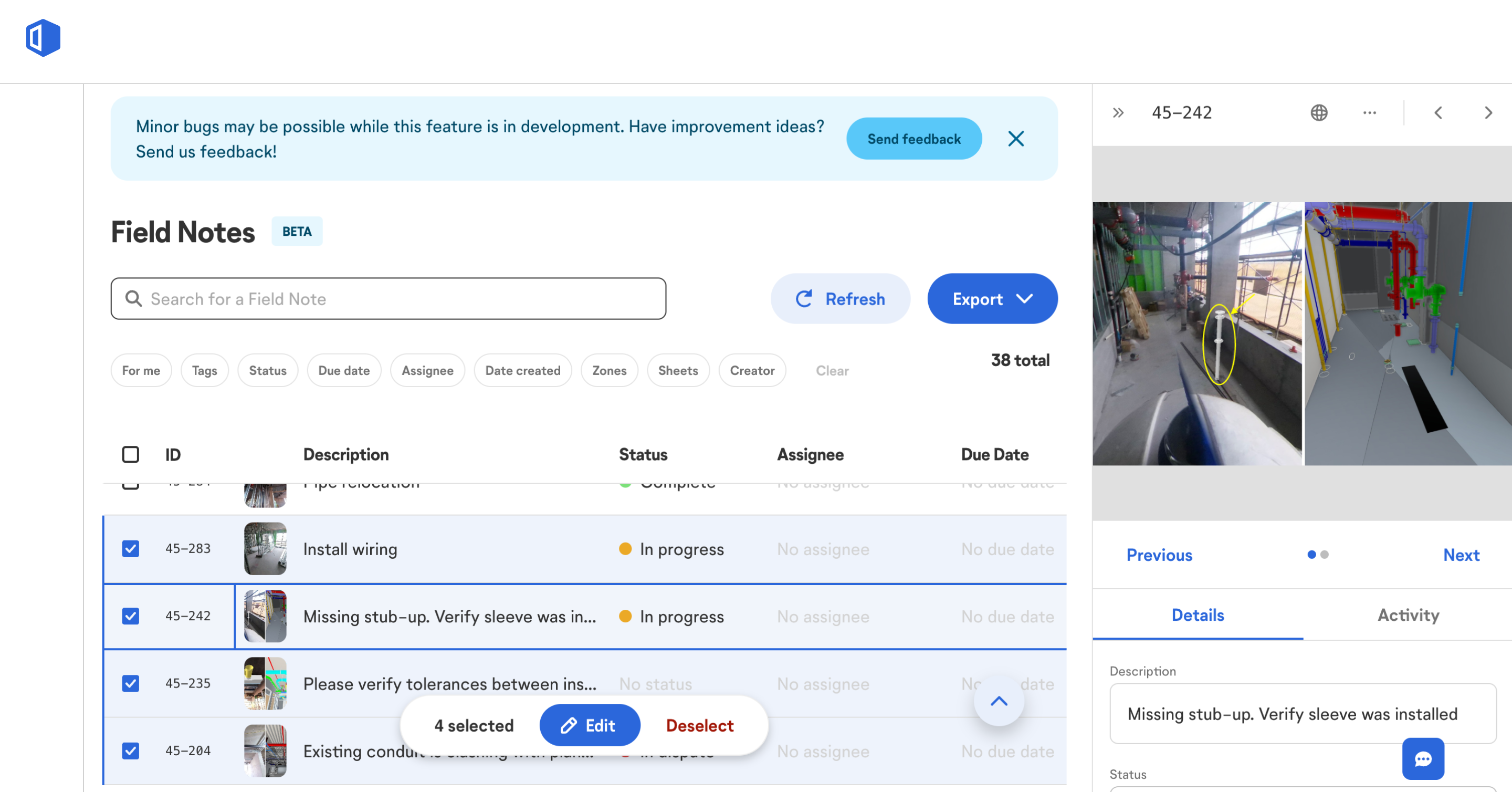
BIM is where a lot of that time savings shows up in practice. AI-enhanced BIM platforms analyze project information across every system in a building and surface conflicts before they become field problems. Automated clash detection, a process that used to consume entire workdays, now catches system conflicts early, before they turn into costly site problems.
Generative design
Generative design is a goal-driven approach that uses automation to generate and evaluate thousands of design options against defined parameters, such as cost, light, egress, or energy load, so teams can make faster, more informed decisions.
According to Autodesk, applying generative design solutions produces:
- Higher quality work.
- Greater speed and productivity.
- Lower construction costs.
Project teams using generative design also report exceeding client objectives across sustainability and occupant experience metrics, including reduced carbon footprints and higher occupant satisfaction scores.
Predictive analytics
Predictive analytics can apply machine learning to historical project data, enabling proactive risk management.
- Surfaces risks and cost overruns before they escalate
- Tightens the gap between projected and actual spend
- AI-powered cost estimation reaches up to 97% accuracy when analyzing past project data, producing more reliable budgets and timelines
Smart sustainability
Running advanced simulations before decisions are locked in makes energy efficiency a standard part of the workflow, not an afterthought:
- HVAC, lighting, and high-consumption systems optimized at the design stage
- Multiple scenarios evaluated and compared before any commitment is made
- Strict sustainability requirements met without last-minute redesigns, reducing long-term operational costs
How does AI improve construction monitoring & control?
On most projects, the gap between what’s happening on-site and what the project team knows is measured in days. AI closes that gap: pulling insights from the field continuously, flagging issues before they compound, and giving teams the clarity to act while there’s still time to course-correct.
That lag is where most project delays are born, because a problem nobody sees for a week is a problem nobody can fix cheaply.
Construction teams lose 35% of productive time to inadequate project monitoring. AI-powered monitoring changes that equation by continuously collecting insights from the field and surfacing issues the moment they appear, rather than hours or days later when the window to act may be closed. Project teams get a clear picture of where work stands without having to chase updates from the field.
Contract compliance reaches new levels of precision with AI-powered tracking systems. These platforms monitor deadlines, deliverables, and regulatory requirements, and their algorithms become increasingly adept at flagging compliance issues based on historical patterns.
AI-enhanced equipment management also has significant financial impact. Smart sensors paired with predictive algorithms spot potential failures before they occur, dramatically reducing costly downtime. PETRONAS exemplifies the bottom-line benefits—their AI analytics program delivered $33 million in savings while boosting plant utilization by 0.1%.
Project teams gain unprecedented insight through modern reporting platforms that deliver:
- Performance metrics in real-time, ending reliance on after-the-fact reports.
- Structured data collection and analysis frameworks.
- Automated compliance documentation trails.
Research confirms the competitive edge—organizations leveraging data analytics consistently outperform industry peers. Beyond daily operations, these AI monitoring systems create detailed digital records, proving invaluable for future maintenance and renovation work.
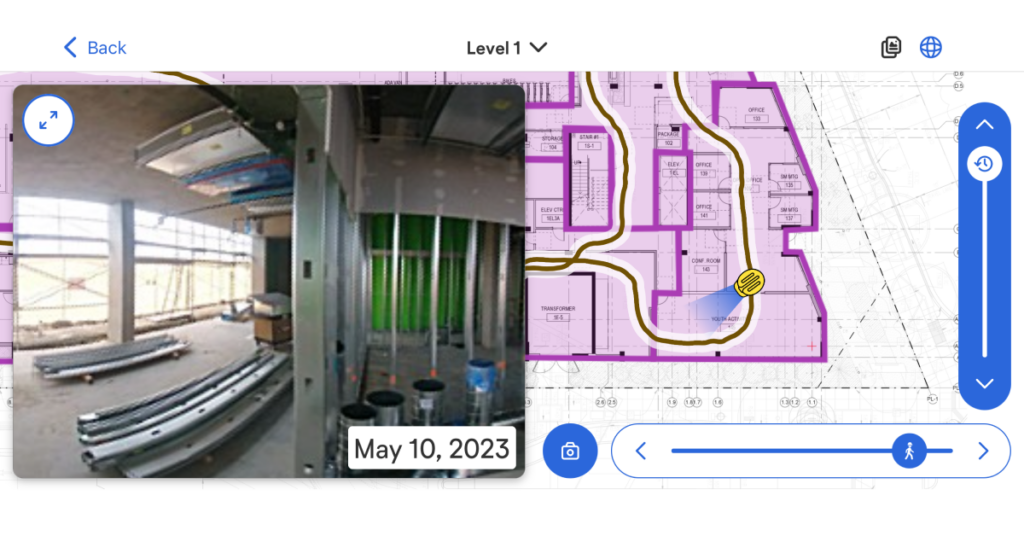
Computer vision technology marks perhaps the most significant advance in progress tracking. These systems enable automated detection of as-built conditions and work-in-progress measurements. Project managers now track site progress with unprecedented accuracy, spotting productivity trends and scheduling conflicts without constant site visits.
Those spatial AI-driven insights are what let a project manager pull up any zone on any date and see exactly what changed, instead of scheduling another site visit to check.
This is the engine behind AI construction progress tracking, mapping detected components to the schedule so productivity issues surface early enough for the team to act on them.
Wrapping it up
Construction teams adopting AI report measurable gains across three areas:
| Area | What it delivers |
| BIM-enhanced planning and generative design | Faster decisions, fewer redesigns, lower costs |
| IoT-enabled site execution | Real-time visibility, fewer delays, tighter budget control |
| Data-driven monitoring | Issues caught weeks earlier than traditional methods |
The market reflects it. AI construction technology is projected to reach $22.68 billion by 2032.
The direction is clear: teams that commit to predictive analytics, computer vision, and digital twin technology consistently outperform competitors on speed, cost, and safety. The gap between early adopters and everyone else is already widening.
The harder part is implementation. Getting the right tools in place, bringing stakeholders along, and driving actual adoption takes a different kind of work. Our webinar covers what successful rollouts look like in practice.
AI in construction Frequently Asked Questions
Is AI already widely used in construction?
Adoption is growing but uneven. Most firms are using AI for specific workflows: scheduling, progress monitoring, and cost estimation, rather than running it across the full project. The gap between early adopters and the rest of the industry is widening, and the teams moving now are building an advantage that will be hard to close later.
What types of construction projects benefit most from AI?
Large-scale commercial, infrastructure, and industrial projects see the strongest returns, where the cost of poor coordination and delayed decisions is highest. But any project with complex sequencing, multiple stakeholders, or tight timelines has something to gain from better visibility and faster issue resolution.
Does AI replace project managers in construction?
No. AI handles the work that shouldn’t require a project manager’s attention in the first place, like repetitive documentation, manual reporting, routine compliance tracking. That frees up the people who actually understand the project to focus on the decisions that move it forward.
What are the main challenges of adopting AI in construction?
The biggest obstacles are rarely technical. Upfront costs and integration with existing systems are real considerations, but the harder challenge is getting consistent adoption across field and office teams. The tools that stick are the ones that fit how crews actually work, not the ones that require a workflow overhaul before anyone sees value.