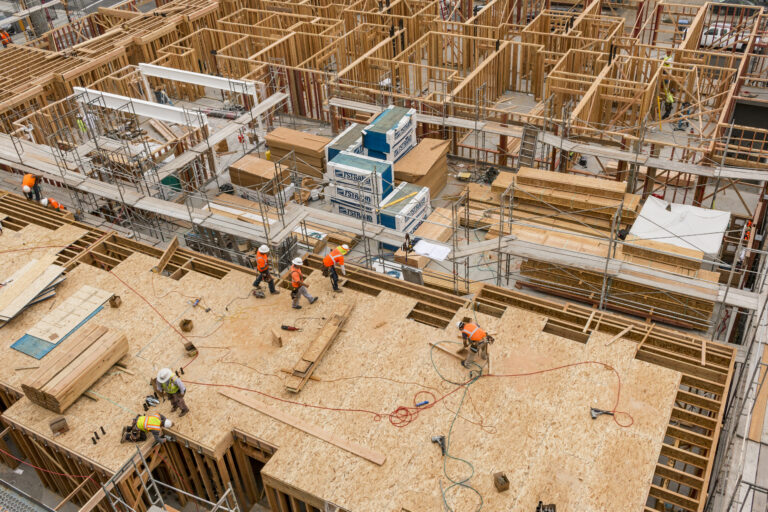
A construction punch list is a formal document that records every incomplete item, incorrect installation, or deficiency that the project team must resolve before a project is considered complete. Until every punch list item is closed, final payment stays on hold.
A punch list identifies all outstanding tasks and deficiencies that must be corrected before the team releases final payment. The term has regional equivalents: snag list in the UK and Australia, deficiency list in Canada, defect list in some contracts. The name itself comes from an older practice—field teams would punch a hole next to each item on a paper list as they completed it.
Teams create the punch list when a project reaches substantial completion—the point at which the space is complete enough for the owner to occupy or use, even if minor corrections remain. AIA Document A201-2017 requires the contractor to prepare and submit a comprehensive list of items to be completed or corrected before requesting a pre-final inspection. That list triggers the architect’s review and the formal punch walk.
Final completion comes later, once every item has been closed and verified. That is when final payment and retainage release occur.
A 400-item punch list at the end of a project tells a more complete story about how the team managed the project from the start—documentation gaps, miscommunication, and issues that went untracked for weeks.
Who owns the punch list process & when does it start?
Each party in the construction punch list process has a distinct role—and the timing matters as much as the ownership:
| Role | Responsibility |
| General contractor | Prepares the initial punch list, coordinates subcontractor assignments, tracks progress, and manages documentation through final acceptance |
| Specialty contractors | Complete corrections within their scope and provide evidence of resolved items |
| Architect or designer | Verifies that finished work meets contract specifications and design intent |
| Owner | Reviews completed corrections and gives final sign-off before approving final payment |
Waiting until substantial completion to start documenting deficiencies means issues accumulate, context is lost, and the construction punch list process becomes reactive.
Best practice is to start an internal pre-punch two to three weeks before the formal owner walkthrough. The general contractor walks the jobsite independently, identifies and resolves what they can, and reduces the formal list before anyone else sees it. Builders who conduct their own walkthrough early arrive at the owner’s inspection with a far shorter list and far fewer surprises.
A rolling punch list takes this further—the project team documents and assigns issues throughout the construction process rather than saving them for the end. They verify each construction task at completion rather than revisiting it weeks later. This approach requires more discipline earlier, but cuts the volume and complexity of punch work at closeout.
“If you treat the punch list like it belongs to closeout, you’ve already lost the window to fix things cheaply. Trades have demobilized, context has faded, and every item costs more to resolve than it would have three weeks earlier. The builders who consistently close out clean start their own walkthrough well before anyone else shows up.”
—Wesley DuBose, Product Manager, OpenSpace
What goes on a construction punch list?
A construction punch list covers five main categories of items:
| Category | What it includes |
| Incomplete or incorrect installations | Work started but not finished, or installed contrary to contract specifications |
| Damage to existing finishes | Scuffs, scratches, or breaks to surfaces caused during the construction process |
| Missing items | Hardware, fixtures, accessories, or equipment not yet installed |
| Functional deficiencies | Mechanical, electrical, and plumbing systems that fail testing or do not perform as specified |
| Documentation gaps | Missing O&M manuals, warranties, as-built drawings, or other closeout submittals |
Not all items carry equal weight. The project team must resolve critical tasks that block occupancy or fail life-safety requirements before certifying substantial completion. Items that affect function but not occupancy typically follow.
Owners and contractors can often schedule minor corrections and cosmetic fixes after the owner takes possession, provided they agree on timelines in the Certificate of Substantial Completion.
Completion criteria should be defined in the contract before construction begins. Ambiguous scope leads to disagreements at closeout. By then, when the most is at stake, people have the least patience.
Why punch lists balloon & what it signals
A bloated final punch list is rarely a closeout problem. It’s a documentation problem that accumulated over months. When builders track issues verbally or in separate spreadsheets, by the time the punch walk happens no one has a complete picture of what was flagged, what was fixed, and what was left behind.
When teams rely on spreadsheets, the record fragments. Project managers chase status updates through texts and emails. Subcontractors maintain their own versions. The person assigned to an item may not even know they own it.
Research suggests that addressing punch items after the fact costs two to five times more than catching the same issue during construction, due to remobilization, trade coordination, and schedule compression.
“A 300-item punch list is a symptom. What it usually tells you is that the team had no consistent way to capture and assign what they were seeing—so issues lived in someone’s head, in a text thread, or in a spreadsheet nobody else could find. By the time the punch walk happens, everyone is reconstructing a record that should have existed for months.”
— Wesley DuBose, Product Manager, OpenSpace
A better spreadsheet doesn’t fix this. Documenting issues throughout the project ensures you see them when they’re cheap to fix, not when the owner is standing in the lobby waiting for a certificate. OpenSpace gives builders a fast, simple way to do that: capture issues in the field as soon as you see them, dictate the details with AI Voice Notes, and AI Autolocation pins the items to the floor plan. If you’re using Procore or Autodesk, two-way sync keeps everything up to date. No double entry.
Request a demo of OpenSpace to see how visual documentation reduces punch list volume at closeout.
How visual documentation changes the construction punch list process
Digital punch list tools have changed more than the format of the list. The more meaningful change is where the documentation originates.
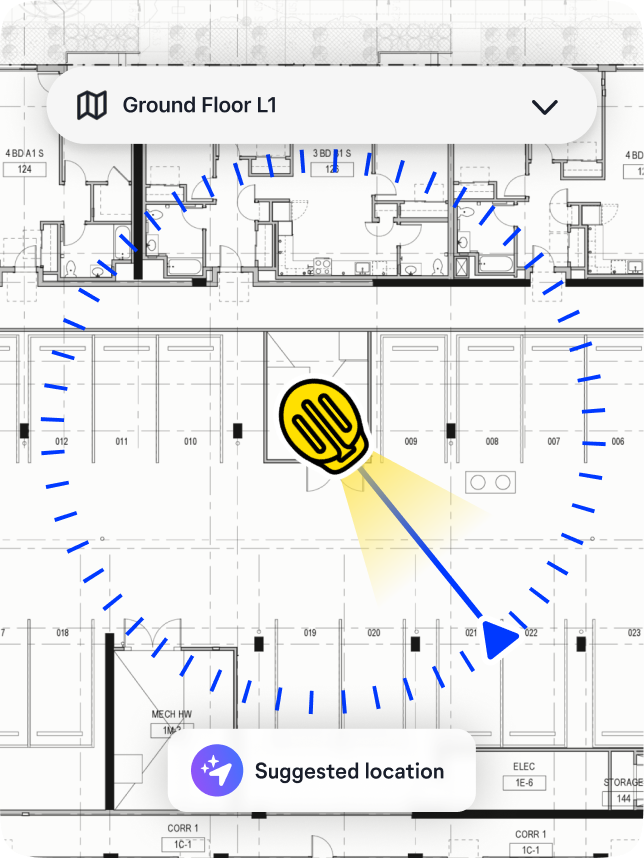
With AI Autolocation, photos the field team takes are automatically pinned to the right spot on the floor plan, and time-stamped—no manual tagging required. The person assigned has all the information they need to start resolving the issue.
CEC, a specialty contractor, runs a 10-person QA/QC team this way. As the team walks, notes are automatically pinned to the project, which means less time on paperwork and more time doing the real work. They can generate filtered PDF reports in seconds rather than assembling them manually before a handover meeting.
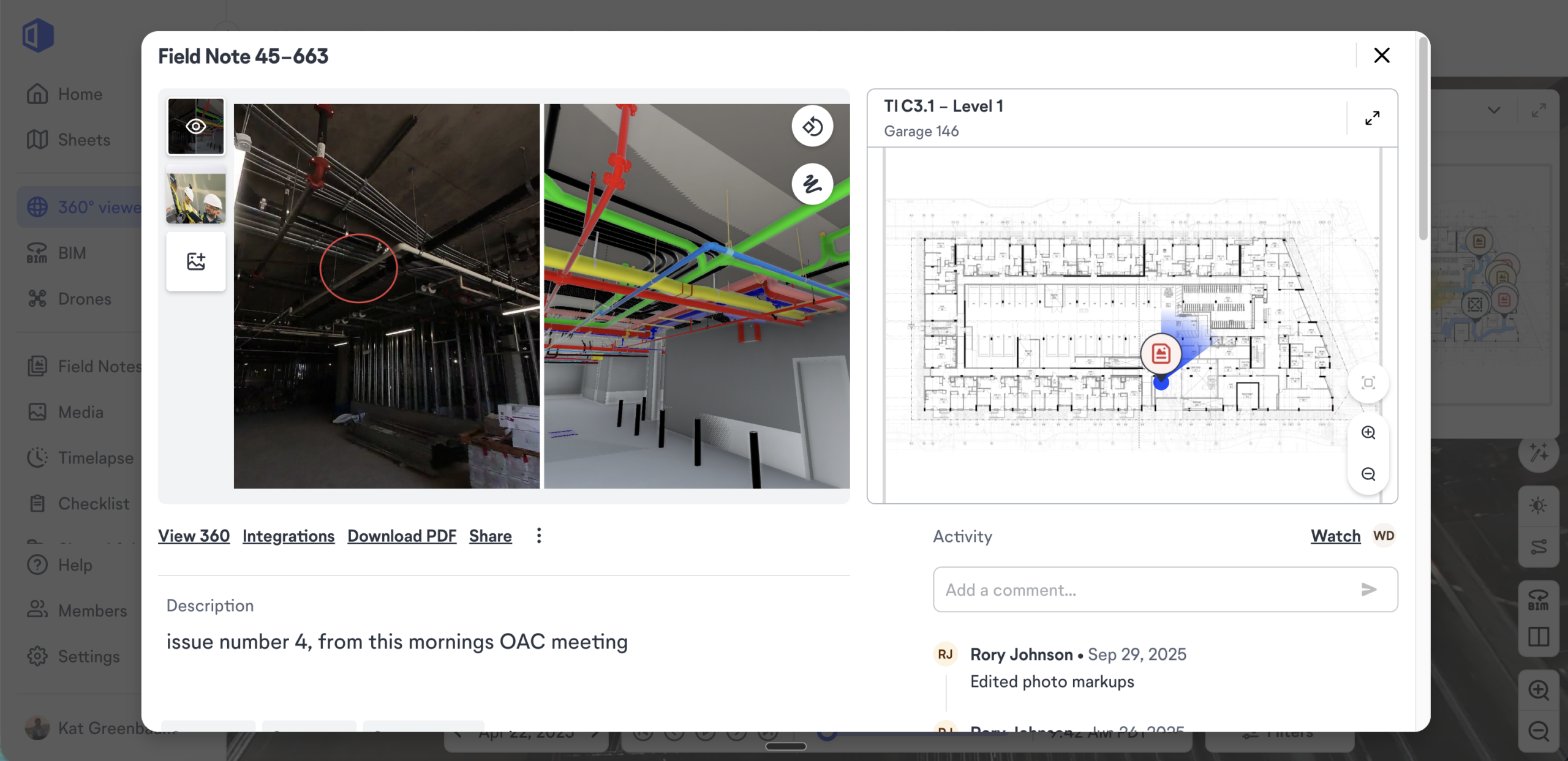
Connecting field documentation to your project management platform removes a second round of manual entry. With OpenSpace Field, construction teams can create, capture, and route Procore Punch List Items and Observations, plus Autodesk Issues directly from the field, up to 85% faster, with two-way sync that keeps both systems current.
For a closer look at how visual Field Notes support punch list and QA/QC workflows, including AI Autolocation and AI Voice Notes, see our Field Notes page.
The OpenSpace QA/QC use case page covers the broader impact on quality control, including how visual checklists support inspections across the construction process.
From punch list to handover: building a complete closeout package
Punch list closure is not the end of project closeout. Owners, lenders, insurers, and future building operators need a defensible visual record of the project.
A complete handover package includes as-built documentation, O&M manuals, warranties, and increasingly, a visual record of the job site that shows what was built, where connections were made, and what exists behind walls and ceilings. When a contractor needs to revisit a building two years after turnover, that visual record tells them what they need to know without opening a wall.
Builders who document the site throughout the project arrive at handover with the record already built. Documentation isn’t created for closeout—it accumulates as the project runs.
EEI Corporation, a construction firm running more than 30 concurrent projects across the Philippines, embedded OpenSpace into their workflow and found that the quality of their client reporting, RFI documentation, and punch list records improved across the board. Owners received more complete handover packages. Field teams spent less time assembling documentation after the fact because the record existed before anyone asked for it.
“Five years ago, a signed-off punch list and a set of as-builts was enough for most owners. That bar has moved. Owners on institutional and capital-intensive projects now expect to be able to see what’s behind the walls, verify that connections were made correctly, and have a record they can hand to their facilities team on day one. A checklist says the work is done. A visual record shows what was actually built.”
— Wesley DuBose, Product Manager, OpenSpace
Best practices for managing punch lists effectively
These best practices apply across project types and team sizes:
| Best practice | The impact |
| Start your own walkthrough two to three weeks before the formal punch walk | Closing items early keeps the owner’s inspection list short and surfaces issues while trades are still on-site |
| Document every punch list item with a photo, exact location, person responsible, due date, and priority level | Vague descriptions create callbacks; complete items get resolved faster |
| Use punch list templates to standardize how items are recorded across trades and projects | Consistency makes status updates and progress tracking reliable across the whole team |
| Sequence repairs logically—structural before finishes, finishes before paint, paint before final cleaning | Out-of-sequence work creates costly rework that adds items back to the list |
| Require photo evidence for item closure | A status update without documentation is not the same as verified completion |
| Integrate with your project management platform so punch items and sign-offs live in one place | Syncing with Procore or Autodesk removes double entry and keeps project managers and field teams on the same list |
| For smaller projects, spreadsheet punch list templates can work as a starting point | As complexity grows, a connected digital punch list system tied to site imagery cuts the manual overhead |
Frequently asked questions
What is the difference between a checklist & a punch list?
A checklist is proactive; a punch list is reactive. Checklists are used during the construction process to verify that work meets quality standards before it’s signed off at each phase. A punch list documents deficiencies after the fact, at or near substantial completion. Using checklists throughout the project is one of the most effective ways to reduce the volume of punch list items at the end.
What is the difference between substantial completion & final completion?
Substantial completion is the point at which the work is complete enough for the owner to use the space for its intended purpose. It triggers the formal punch list process and typically starts the warranty period. Final completion comes when all punch list items have been resolved and verified, and the contractor is eligible for final payment and retainage release.
What is a zero punch list in construction?
A zero punch list is the goal of completing a construction project with no outstanding items at the time of the final walkthrough. It‘s not common on complex commercial projects, but it’s achievable on smaller projects when quality control is embedded throughout the construction process rather than deferred to the end. Rolling punch lists and consistent documentation are the main mechanisms that make it possible.
How do punch lists relate to retainage?
Most construction contracts withhold a portion of payment, typically five to ten percent of the total contract value, as retainage until the punch list is closed and final completion is certified. An unresolved or poorly managed punch list directly delays final payment. For specialty contractors, this means cash tied up until corrections are verified and signed off, often on work completed weeks or months earlier.
See how OpenSpace helps construction teams arrive at closeout with fewer punch items and a complete visual record. Request a demo.