360 cameras are changing the way jobsites are documented and managed in the construction industry. Field teams that document consistently, make better decisions, catch issues earlier, and have the visual record of every call they make. 360 cameras are one of the fastest ways to build that record.
In this article, we’ll explore why 360 cameras are becoming an essential part of modern construction technology, from AI-powered analytics to seamless BIM integration. You’ll discover how 360 cameras play an important role in transforming site capture and streamlining construction operations. And how these off-the-shelf cameras are invaluable for remote inspections, risk management, and maintaining an accurate visual record of your project’s progress.
What are the benefits of 360 cameras in construction?
360 cameras create a comprehensive visual record of the jobsite that ensures no details are overlooked. Unlike static images, 360 captures offer interactive content that allows you to navigate and see every angle of the site. 360 cameras for construction are revolutionizing how you approach, document, and manage projects. These innovative devices contribute to a range of advantages that enhance efficiency, improve collaboration, and streamline operations on jobsites.
Comprehensive visual documentation
With 360 cameras, you can capture detailed panoramic views of your construction site, providing a full-circle perspective that ensures no detail is overlooked. This visual documentation, an image-rich record, gives you the ability to conduct thorough analysis and informed decision-making. Unlike static images, 360° photos offer interactive exploration, allowing you to navigate and examine every angle of the site.
Time and cost savings
Using 360 cameras on your construction sites means you can significantly reduce the need for multiple site visits. Since this technology enables remote assessments and monitoring, you can reduce travel expenses and gain valuable time. With virtual site walkthroughs project stakeholders can explore the construction site as if they were physically present. Additionally, with documentation from 360 cameras, you can identify and address problems faster, reducing the need for rework and additional materials. This proactive approach to issue detection can lead to substantial cost savings throughout the project lifecycle. Those savings compound when fast, complete jobsite documentation becomes routine, so teams catch problems while they are still cheap to fix.
Specialty contractors in regulated trades like fire protection see some of the biggest returns from that proactive approach, because visual documentation for risk reduction can mean the difference between a quick claim resolution and months of costly litigation.
Improved collaboration and communication
360 cameras give every team member and stakeholder a shared view of project progress. This bridges the gap between field and office, ensuring decisions are made with a complete understanding of site conditions.
With OpenSpace, that shared view is always current. Every image is organized, automatically searchable through the media library with AI search, and accessible remotely, so the field sees what the office sees, without anyone having to send a single file.
This centralization streamlines workflows, enhances productivity, and ensures that all project members, regardless of their location, can access up-to-date visual information, facilitating consistent and informed decision-making.
What are the key features of 360 cameras for construction?
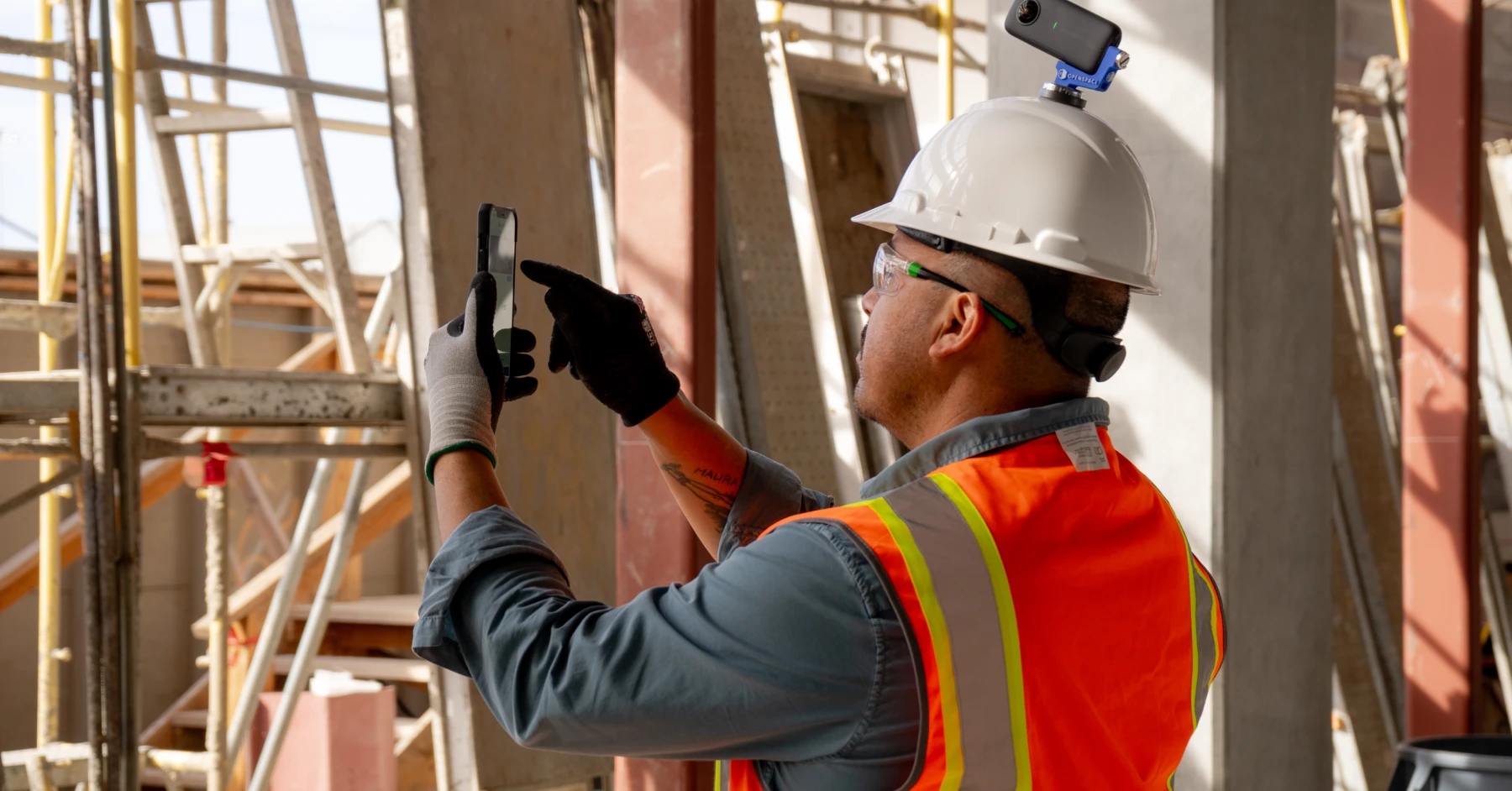
Modern 360 cameras are purpose-built for jobsite conditions. They are high-resolution to capture fine details at up to 6k, simple and light enough to mount on a hard hat (and forget), and integrated with the construction management platforms your team already uses.
High-resolution image capture
Modern 360 cameras boast impressive image quality, allowing you to capture every detail of your construction site in up to 6K resolution. This high-resolution capture ensures that even in low-light conditions, you can document your project with clarity and precision. The ability to capture seamless 360-degree images and videos makes these cameras versatile tools for various integration and analysis purposes.
Easy mounting and operation
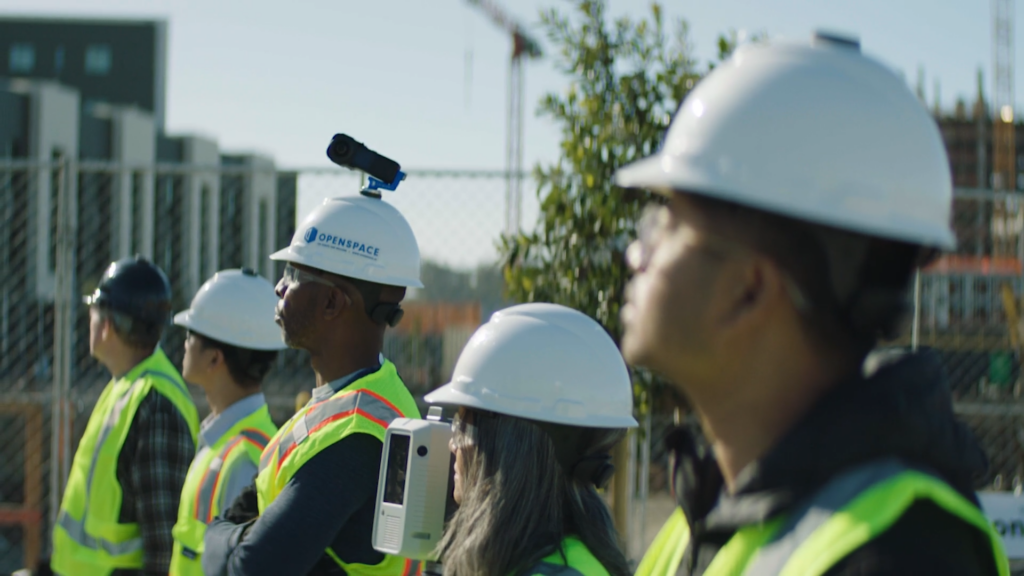
One of the key advantages of 360 cameras for construction is their user-friendly design. These cameras are typically compact and lightweight, making them easy to carry and operate on-site. You can mount them on tripods, monopods, or even attach them to your hard hat for hands-free operation. With one-click functionality, you can start automatic 360-degree capture, streamlining the documentation process. Some models also feature built-in timelapse modes, allowing you to document your entire jobsite with a simple walkthrough.
Integration with project management software
To maximize the benefits of 360 cameras, many manufacturers have developed integrations with popular construction management software. These integrations allow you to incorporate 360-degree imagery into your existing workflows. For example, OpenSpace connects 360 imagery directly to the tools your team already uses. Field notes sync into Procore Punch Items, Observations, and ACC issues with 2A sync. That means issues logged in the field show up in Procore or Autodesk Construction Cloud immediately, without anyone ever retyping a thing.

How do you implement 360 camera technology on a jobsite?
Successful implementation comes down to three things: selecting the right camera, training your team on getting consistent captures, and establishing documentation protocols that tie every photo to a floor plan location. By following best practices, you can ensure that your team effectively uses this technology to enhance jobsite documentation and project management.
Choosing the right camera equipment
When selecting 360 cameras for your construction projects, choose a camera based on image quality, ease of use, durability, and compatibility with reality capture software.
Look for cameras that offer:
- High-resolution capture up to 6K to document fine detail
- Built-in stabilization for smooth, clear video
- Long battery life with replaceable batteries for large-site coverage
- Strong compatibility with your reality capture platform
Training staff on camera use
To get the most out of your 360 cameras, it’s crucial to train your team on proper usage. Focus on teaching them how to position the camera for optimal coverage. Encourage staff to stand at a distance while capturing images to avoid appearing in the frame. Also, instruct them on how to use any accompanying mobile app and software for easy control and preview of shots.
Establishing documentation protocols
Create a standardized process for capturing, organizing, and reviewing 360° imagery, with every photo linked to its location on the project floor plan and sorted chronologically. Turning that standardized process into a jobsite documentation checklist keeps each capture purposeful, so teams know which milestones to shoot before the next trade covers the work.
Strong documentation protocols include:
- A dedicated reality capture platform that ties imagery to floor plan locations
- Regular walkthroughs on a set cadence, such as weekly or bi-weekly
- Assigned reviewers who check for proper categorization and remove mislabeled photos
- Consistent naming and organization across every phase of the project
Case studies: success stories in construction documentation
Large-scale commercial projects
360 cameras for construction have revolutionized documentation in large-scale commercial projects. One notable success story involves a multi-story office complex where project managers implemented OpenSpace automated 360° reality capture technology. This solution enabled them to create a Google Street View-style walkthrough of the entire site, allowing stakeholders to manage the project remotely. The result was a 67% reduction in project costs and a significant time savings of multiple hours per week. The comprehensive visual documentation facilitated better coordination, reduced rework, and provided a trusted record of site status throughout the construction process.
Infrastructure and public works
For infrastructure and public works projects, 360 cameras have enhanced safety compliance and project monitoring. In a large-scale bridge construction project, field teams used 360 cameras to capture weekly progress updates. The resulting digital twin enabled remote stakeholders to perform virtual inspections, identify potential safety hazards, and monitor construction phases without frequent site visits. This approach not only improved safety oversight but also streamlined decision-making processes, leading to more efficient project management and reduced travel costs for key personnel.
How can you integrate 360 cameras and reality capture into your projects?
Integrating 360 cameras into construction processes marks a significant shift in how projects are documented and managed. These cameras have a profound impact on efficiency, collaboration, and decision-making, offering a comprehensive visual record that enhances every aspect of construction management. From large-scale commercial developments to public infrastructure, the benefits of 360 camera technology are clear, leading to cost savings, improved safety, and better client communication.
As the construction industry continues to embrace digital innovation, 360 cameras are set to play an increasingly vital role in shaping the future of project documentation. Their ability to create immersive, detailed visual records opens up new possibilities to streamline and simplify operations and enhance project outcomes. If you’d like to see which cameras OpenSpace supports, refer to our Camera Comparison Guide. To explore the capabilities of reality capture software, schedule a demo and understand how OpenSpace can help simplify your projects and improve your ROI.
FAQs
What are the uses of a 360 camera in the construction industry?
360 cameras are utilized in construction for capturing a comprehensive, panoramic view of the jobsite. This allows for effective monitoring of construction progress and visual documentation on a regular basis.
How does photo documentation benefit construction projects?
Photo documentation in construction provides a detailed record of onsite activities, which is crucial for managing risks and addressing problems promptly. It helps in ensuring compliance with standards, identifying inefficiencies, and exploring cost-reduction opportunities. Teams that follow established photo documentation best practices from the start tend to build a more useful archive because they know exactly what to capture and when to capture it.
What makes 360 cameras significant?
360 cameras are essential to capture jobsite progress, but must be paired with a reality capture software to ensure proper documentation. This capability is crucial for spotting potential hazards around the project, thereby enhancing decision-making and improving safety.
If you’re interested in a live demo to see the many use cases for OpenSpace, schedule your OpenSpace demo here.