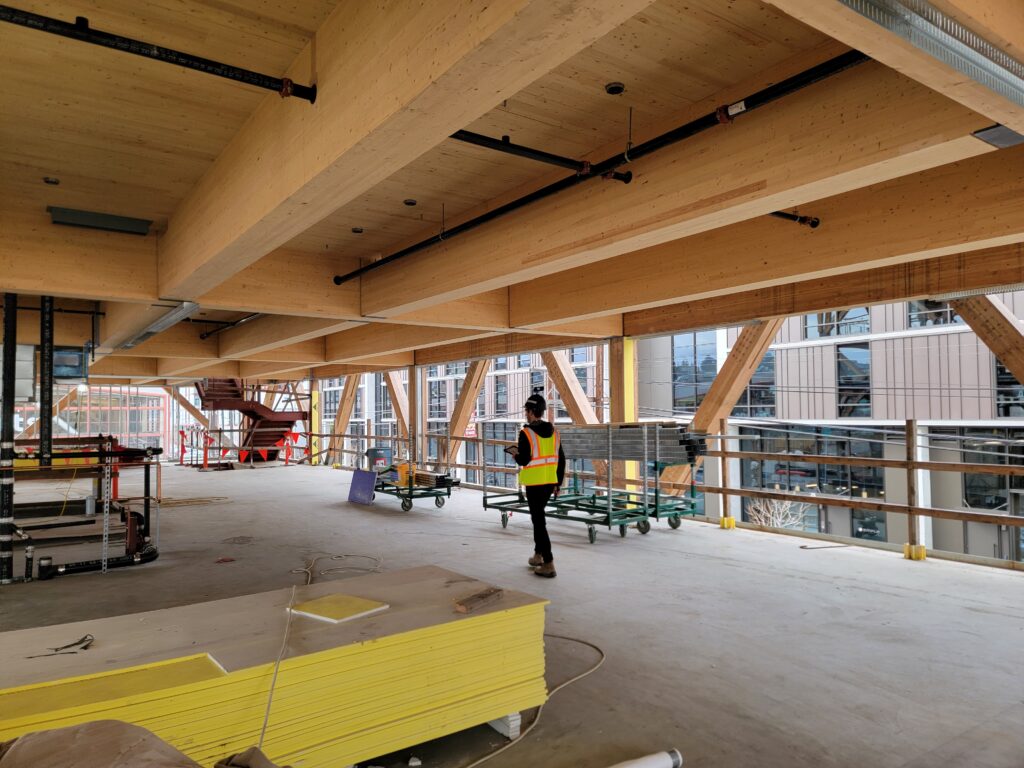
Most builders know delays are common. Fewer know just how common, or how much they cost. The numbers below make it concrete.
The scale of the problem
Construction delays are not outliers. They are the norm. Across project types, contract values, and continents, the research lands in the same place: most projects run late. The ones that don’t are the exception.
| Statistic | Source |
| 98 percent of projects experience cost overruns, delays, or both | McKinsey |
| 75 percent of construction projects are delayed | ScienceDirect |
| Large projects typically finish 20 percent later than scheduled | McKinsey |
| Only 25 percent of projects complete within 10 percent of their original deadline | KPMG |
| Only 31 percent of projects meet schedule, budget, and scope simultaneously | ResearchGate |
| More than 50 percent of delays last one to three months or longer | STARC Systems |
Megaprojects are even harder to defend. A McKinsey review of more than 300 projects with contract values over $1 billion found average cost overruns of approximately 80 percent and schedule delays of around 50 percent. At that scale, slippage isn’t an anomaly. It’s a pattern.
What delays actually cost
A schedule slip is a financial event. Every day past planned completion has a dollar value attached to it.
The math on a $50M project
A $50 million project with a three-year duration works out to roughly $45,662 per day in contract value. Apply a 30 percent average delay, and the cost of that slippage approaches $15 million. That’s before penalties, dispute costs, or lost opportunities. (Source: Deltek)
And it compounds. Extended general conditions, escalating material costs, renegotiated subcontracts, and claims all pile on top of the direct cost of extra time. For teams managing multiple projects at once, the aggregate impact adds up fast.
That’s why delay is increasingly treated as a risk management issue at the executive level, not just a scheduling problem in the field.
What’s actually causing delays
Most delayed projects aren’t late because of one thing. They’re late because of several compounding factors hitting at once. But research does identify clear patterns.
Labor and supply chain
According to the Associated General Contractors of America, 65 percent of firms report projects delayed by supply chain challenges, and 61 percent cite labor shortages as a direct cause. These two factors have become the most consistently cited sources of disruption for builders over the past several years.
How delays break down by cause
| Statistic | Source |
| Supply chain and material management | 21.41% of delay causes (Scielo) |
| Workforce management issues | 20.79% of delay causes (Scielo) |
| Project management failures | 17.64% of delay causes (Scielo) |
| Climate and environmental conditions | 9.34% of delay causes (Scielo) |
Supply chain and labor top the list. But project management is close behind, and that’s the category builders have the most direct control over. Poor planning, weak coordination between field and office, slow issue resolution: these aren’t headline risks, but they account for nearly one in five delay causes.
Construction Dive research points to three recurring culprits: insufficient staffing, material procurement failures, and supply chain disruptions. All three intersect with scheduling in ways that accelerate a slip once it starts.
Where visibility breaks down
One factor cuts across nearly every delay cause: teams often don’t know what’s actually happening on site until it’s too late to course-correct.
Coordination between office and field has historically been one of construction’s most persistent weaknesses. Plans change. Work gets done out of sequence. RFIs sit unanswered. Inspections happen based on photos that don’t tell the full story. By the time the schedule reflects reality, the gap is already costly.
Site documentation has shifted from a compliance function to a strategic one. Builders who can clearly see what’s built, what’s in progress, and what’s behind, quickly and across every project, are in a fundamentally different position than those relying on walk-throughs and weekly reports.
The field-to-office gap
Project planning “remains uncoordinated between the office and the field and is often done on paper,” according to McKinsey’s analysis of the construction industry. That finding is more than a decade old. The builders who closed that gap are the ones consistently finishing on time.
What the shift to digital actually delivers
Digital adoption in construction has accelerated. But adoption is uneven. The builders getting the most out of technology are the ones who’ve integrated it into how the field actually works, not just added tools to the office.
The research on outcomes is direct:
- BIM adoption is associated with up to a 7 percent reduction in project time, according to research published in the ASCE Library.
- Construction automation now helps project managers cut delays by up to 30 percent, according to research on project scheduling accuracy.
The common thread in technology that actually moves the needle on schedule performance is real-time field visibility. When project teams can see what’s been built, confirm work-in-place without walking every inch of a site, and flag issues before they become rework, the delay pattern starts to change.
How OpenSpace helps prevent construction project delays
Most delays don’t announce themselves. They build quietly: a missed coordination issue here, an out-of-sequence install there, a punch list that balloons because no one caught the problem early enough. The common thread is a lack of clear, current visibility into what’s actually happening on site.
The quiet build-up is hardest to catch on mission-critical schedules, where the float that would normally absorb a two-week slip was never in the plan to begin with.
OpenSpace is the Visual Intelligence Platform for builders. Field teams capture continuous, georeferenced site walkthroughs using smartphones, 360° cameras, and drones. The Spatial AI Engine organizes every image by location and time automatically, giving the whole team, from superintendent to project executive, a shared, accurate picture of site conditions. No extra work. No opinions. Just reality, documented.
Here’s where that clarity changes the delay equation.
See what’s built and what’s not
OpenSpace Progress Tracking shows planned versus actual progress by trade, floor, and zone. When work falls behind or goes out of sequence, teams see it in the platform before it shows up as a schedule impact. Automated Spotlights flag potential rework and out-of-sequence installs as they happen. Catch issues early. Correct them before they cost you.
Resolve field issues faster
Field Notes with AI Autolocation and AI Voice Notes lets field teams log issues, observations, and punch items in seconds, auto-pinned to the right location on the floor plan. Teams can create Procore Observations, punch list items, and Autodesk Issues directly in OpenSpace, up to 10 times faster than traditional workflows. Faster issue creation means faster resolution. Faster resolution means fewer accumulated delays.
Eliminate rework cycles
OpenSpace combines AI-driven progress detection with human verification, producing a reliable, defensible record of work-in-place. Billing approvals, owner alignment, and quality sign-off are anchored to visual proof, not verbal confirmation. That’s how you cut the disputes and rework cycles that quietly extend timelines. Suffolk used OpenSpace to complete one project a full month ahead of schedule. WPI saved $10k in rework and backcharges. BOLDT reduced scheduling delays by 20 percent.
Keep field and office in sync
Project executives can review any site remotely using the same visual record the field just created. Split View lets reviewers compare current conditions against a prior date, side by side. Decisions don’t bottleneck on who was last on site or what they remember seeing. Remote visibility compresses approval cycles, reduces unnecessary travel, and keeps work moving even when key stakeholders aren’t physically on the project.
Build a record that holds up
A time-stamped, searchable visual archive of every walkthrough is also a claims prevention tool. When a schedule dispute arises, objective visual evidence of site conditions over time is far more useful than memory or written reports. Builders using OpenSpace carry that record into every negotiation, inspection, and closeout.
A time-stamped visual record is exactly what counsel needs when a liquidated-damages clause turns a two-week schedule slip into a six-figure argument.
No confusion. No delays. Just real clarity.
The field is the most underutilized source of intelligence in construction. When teams lack a clear picture of what’s happening on site, decisions slow down and work falls behind. Visual Intelligence gives builders the real-time clarity to intervene early, before a variance becomes a delay. Learn more at openspace.ai.
What to do with these numbers
A 75 percent delay rate means if you’re running multiple projects right now, most of them are late. A 31 percent on-time-on-budget rate means the odds are stacked against even well-run teams.
The causes are identifiable. The financial impact is calculable. The gap between office and field, which drives so much preventable slippage, is closeable.
The question isn’t whether delays are a serious problem. It’s how much of the risk you’re willing to carry, and how much of it you can address before the next project starts running behind.
- Schedule delays affect 75 percent of construction projects globally.
- Only one in three projects meets schedule, budget, and scope simultaneously.
- Supply chain, labor, and project management failures account for the majority of delay causes.
- Real-time field visibility is the highest-leverage intervention available to builders today.